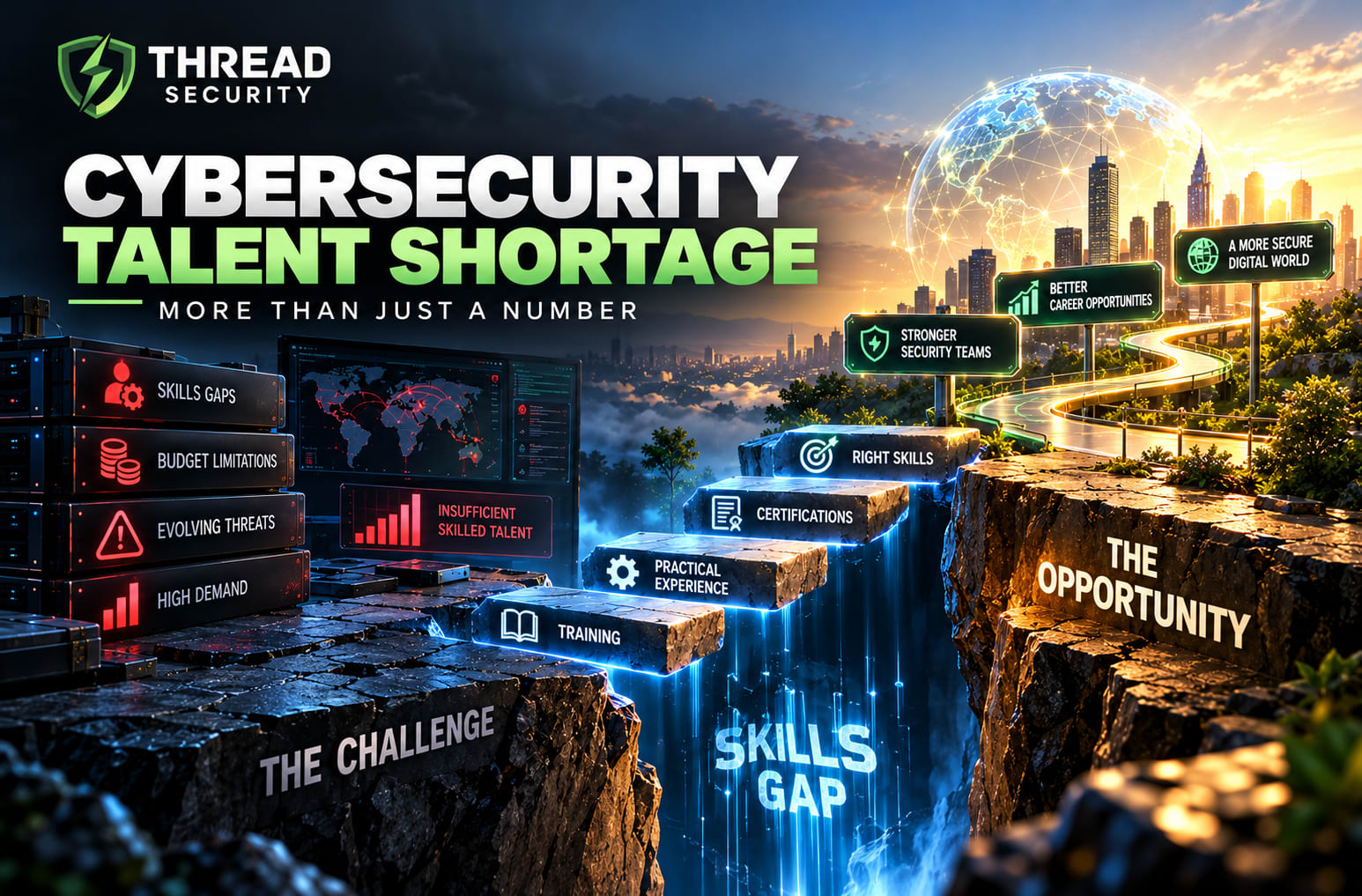
Cybersecurity talent shortage is a phrase often used to describe the difficulty organizations face when hiring and retaining security professionals. But does the latest research show that the world simply needs more cybersecurity workers, or is the bigger problem finding people with the right skills? The 2025 ISC2 Cybersecurity Workforce Study offers a more nuanced answer: staffing challenges remain, but specific skills gaps, budget limitations, and the changing demands of cybersecurity work deserve equal attention.
ISC2 surveyed 16,029 cybersecurity practitioners and decision-makers for its 2025 study. Its findings should not be confused with a direct count of every vacant cybersecurity position worldwide. Instead, they describe what participating professionals reported about their teams, skills needs, budgets, and working conditions. Understanding that distinction helps students, job seekers, employers, and training providers make better decisions beyond attention-grabbing headlines.
1. What Does “Cybersecurity Talent Shortage” Really Mean?
The phrase can refer to several different problems. An organization may not have enough people to cover its security operations. It may have a team but lack specialists in cloud security, application security, incident response, or security engineering. It may struggle to afford experienced candidates, or it may not have enough time and budget to train existing employees.
These situations are related, but they are not identical. Hiring more people can help when workloads exceed a team's capacity. However, adding headcount alone may not solve a problem if the organization lacks a specific capability, has poorly defined roles, or cannot provide the tools and training required for effective work.
This distinction matters for people planning a cybersecurity career. A general interest in cybersecurity is a starting point, but employers need demonstrable capabilities relevant to the role. It also matters for employers: workforce planning should identify the actual work that needs to be done, the skills required, and the resources available to build those capabilities.
2. What the 2025 ISC2 Workforce Study Actually Found
ISC2's 2025 study reported several findings that help explain the current workforce debate:
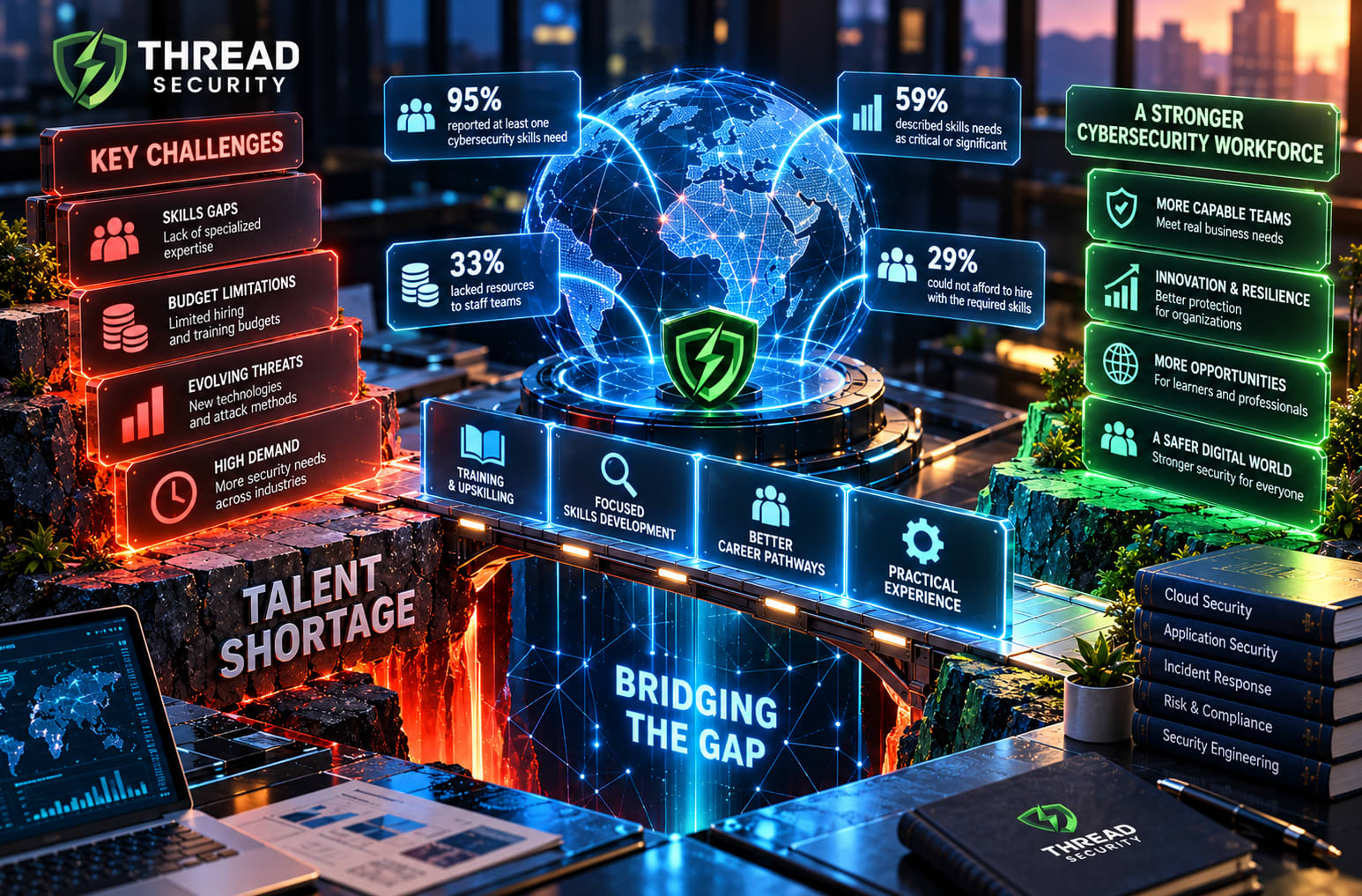
95% of respondents reported at least one cybersecurity skills need within their team or organization.
59% of respondents described their skills needs as critical or significant.
88% of respondents reported at least one significant cybersecurity consequence associated with skills deficiencies, while 69% reported more than one.
33% of respondents said their organizations lacked the resources to staff their teams adequately.
29% of respondents said their organizations could not afford to hire staff with the skills they needed.
These figures are reported in the official ISC2 study. They describe survey participants' reported experiences; they should not be presented as percentages of all cybersecurity workers or as a count of vacant jobs.
One especially important change is that ISC2 did not publish a new global cybersecurity workforce-gap estimate in its 2025 study. The organization explained that respondents were placing greater emphasis on critical skills needs than on headcount alone. That does not mean staffing shortages have disappeared. It means the research calls for a more detailed discussion than a single global shortage number can provide.
3. Skills Gaps May Be More Important Than Headcount Alone
A security team can have employees and still lack the capabilities required to protect its organization. For example, a company might have staff who can monitor alerts but lack specialists who can investigate a complex intrusion, secure cloud infrastructure, review application code, or assess the risks of a new AI deployment.
ISC2's 2025 study identified AI, cloud security, risk assessment, application security, security engineering, and governance, risk and compliance among the skills needs reported by respondents. The specific ranking reflects that study's participants and should not be treated as a universal ranking for every employer or country.
The practical lesson is that cybersecurity capability depends on matching people and skills to real operational needs. Employers may need to recruit, but they can also invest in internal training, cross-training, mentoring, and clearer career pathways. Professionals can respond by identifying gaps in their knowledge and building evidence of their abilities through practical work.
4. Why Is the Cybersecurity Skills Gap Difficult to Close?
Budget constraints
Training, recruitment, and retention all require investment. ISC2 reported that budget limitations were a significant factor behind staffing and skills challenges in the organizations represented in its survey. Some organizations reported that they could not afford to hire enough people or could not afford candidates with the skills they needed.
When budgets are limited, security teams may have to prioritize urgent tasks over training and longer-term improvements. This can create a cycle in which employees have little time to develop new skills, even as the technology and threat environment changes.
Changing technology requirements
Cloud services, software supply chains, identity systems, automation, and AI can introduce new security considerations. Organizations need people who understand both the technology and how it can fail. The exact requirements vary with an organization's systems, sector, risk profile, and regulatory obligations.
Experience and practical capability
A qualification can demonstrate structured learning, but it does not automatically prove that someone can investigate an incident or solve a security problem independently. Practical exercises, supervised projects, labs, internships, and clear technical documentation can help learners demonstrate what they understand and where they still need guidance.
Retention and professional development
Hiring is only one part of workforce planning. Organizations also need to help current employees develop, stay engaged, and progress. Training opportunities, realistic workloads, management support, and clear career paths can influence whether teams retain valuable knowledge and experience.
5. What Does the Data Say About AI and Cybersecurity Jobs?
AI is changing cybersecurity work, but the evidence should not be reduced to the claim that AI will either eliminate cybersecurity careers or automatically create more jobs for everyone.
In its 2025 study, ISC2 reported that 28% of respondents had already integrated AI tools into their cybersecurity operations, while others were testing or evaluating them. Among respondents actively using AI security tools, many reported productivity benefits. The study also found that respondents anticipated new or evolving skills needs as AI became more widely used.
AI can assist with tasks such as summarizing alerts, supporting code review, analyzing large volumes of information, and helping draft documentation. Those capabilities can change how work is performed. They do not remove the need to validate findings, understand business context, protect sensitive information, and make accountable security decisions.
AI also creates security questions of its own. Organizations must consider data privacy, access controls, model and application risks, and how AI-enabled systems might be misused. Professionals who understand cybersecurity fundamentals and learn to assess AI-related risks can prepare for this changing environment without assuming that a particular job outcome is guaranteed.
6. Which Cybersecurity Skills Should Beginners Build?
For aspiring cybersecurity professionals, the workforce findings support a practical approach: build strong fundamentals, then develop skills aligned with a target role.
Networking: Understand TCP/IP, DNS, HTTP, ports, routing, and common network services.
Operating systems: Become comfortable with Linux and Windows, system logs, permissions, processes, and basic administration.
Security fundamentals: Learn authentication, access control, encryption concepts, vulnerability management, and incident response.
Cloud security: Understand identity and access management, secure configurations, logging, and shared-responsibility concepts for cloud environments.
Application security: Learn how web applications work and study common risks through resources such as the OWASP Top 10.
Automation and AI literacy: Use scripting to automate appropriate tasks and learn how to verify AI-generated suggestions rather than accepting them without review.
Communication: Practise writing clear findings, explaining risk, documenting evidence, and recommending realistic remediation.
Beginners do not need to master every cybersecurity specialization at once. A more useful plan is to select a direction—such as SOC analysis, penetration testing, cloud security, application security, or governance and risk—and build the foundational knowledge and practical skills required for that path.
7. Certifications, Projects, and the First Cybersecurity Job
Certifications can help structure learning and signal knowledge, but their value depends on the role, the employer, and the candidate's broader evidence of ability. Before paying for an exam, review its objectives, prerequisites, cost, and relevance to the work you want to do.
Projects can make learning more concrete. A beginner might document a security assessment of an intentionally vulnerable lab, build a basic log-analysis workflow using sample data, create a cloud security checklist, or write a report explaining how a test finding was verified and remediated. All testing should take place on systems the learner owns or has explicit permission to assess.
For job applications, describe what you actually did, the tools you used, the evidence you collected, and the limitations of the exercise. Avoid claiming professional experience based only on a tutorial or listing tools without explaining how you used them. A focused portfolio with clear documentation can give an interviewer something specific to discuss.
ISC2's workforce study also describes multiple pathways into cybersecurity, including IT experience, education, certifications, self-directed learning, and internships or apprenticeships. It does not establish a single best path for every candidate. Your starting point, finances, local opportunities, and target role should guide your plan.
8. What Employers and Training Providers Should Do
The research has implications beyond individual job seekers. Employers should define the skills needed for each role, make job descriptions realistic, and distinguish essential requirements from skills that can be learned after hiring. They should also consider internal development and cross-training where appropriate.
Training providers can help by connecting theory with practical exercises, giving learners meaningful feedback, teaching responsible security practices, and explaining how skills map to different job roles. Learners should evaluate courses carefully and look for transparent syllabuses, practical work, clear learning outcomes, and realistic descriptions of career support.
Neither employers nor educators should promise that a course, certification, or single technology guarantees employment. The more useful goal is to help people build demonstrable capabilities that can be improved over time.
9. How Thread Security and Thread Security Education Fit In
At Thread Security, cybersecurity workforce challenges connect directly to the importance of practical security knowledge and continuous skills development. Thread Security Education is relevant to learners who want to build their understanding of cybersecurity concepts and prepare for technical learning paths. As the industry evolves, structured study should be paired with hands-on practice, feedback, and an understanding of the responsibilities that come with security work.
If you are exploring cybersecurity training, review the available Thread Security Education program details and compare the curriculum with your goals. Look for coverage of fundamentals, practical exercises, ethical boundaries, and the skills required for your chosen direction. Training is most useful when it helps learners understand how to apply knowledge, explain their reasoning, and identify what they still need to learn.
Conclusion: The Shortage Story Needs More Context
The 2025 ISC2 Cybersecurity Workforce Study does not say that cybersecurity staffing problems have disappeared. It shows that staffing, budget constraints, and skills needs continue to affect the organizations represented in the survey, while also highlighting a growing focus on specific capabilities. Its decision not to publish a new global workforce-gap estimate is an important reminder to read the data carefully.
For job seekers, the takeaway is to focus on foundational knowledge, role-relevant skills, practical evidence, and continuous learning. For employers, it is to identify the capabilities they genuinely need and invest in both hiring and development. The cybersecurity talent shortage is not a single problem with a single solution; it requires better workforce planning, realistic hiring, and sustained skills development.
Take the Next Step in Your Cybersecurity Journey
Want to build practical cybersecurity skills and understand where you fit in this evolving industry? Explore the learning opportunities offered by Thread Security Education and learn more about Thread Security. Start by identifying your target role, reviewing the skills it requires, and choosing a learning plan that includes practical work. Read more of our cybersecurity resources, strengthen your foundations, and take your next step toward becoming a capable and responsible cybersecurity professional.
References and Further Reading
Akshay Kumar
VERIFIEDAcademic Coordinator · Thread Security
Faculty mentor & research guide at Thread Security Education.