Ransomware has always depended on more than malicious code. Attackers need to identify targets, gain access, move through systems, find valuable information, and pressure victims into paying. Increasingly, artificial intelligence is being used to support parts of this process. AI agents can plan tasks, interact with tools, analyse information, and execute multi-step workflows with less constant human direction. This is changing how security teams think about ransomware attacks.
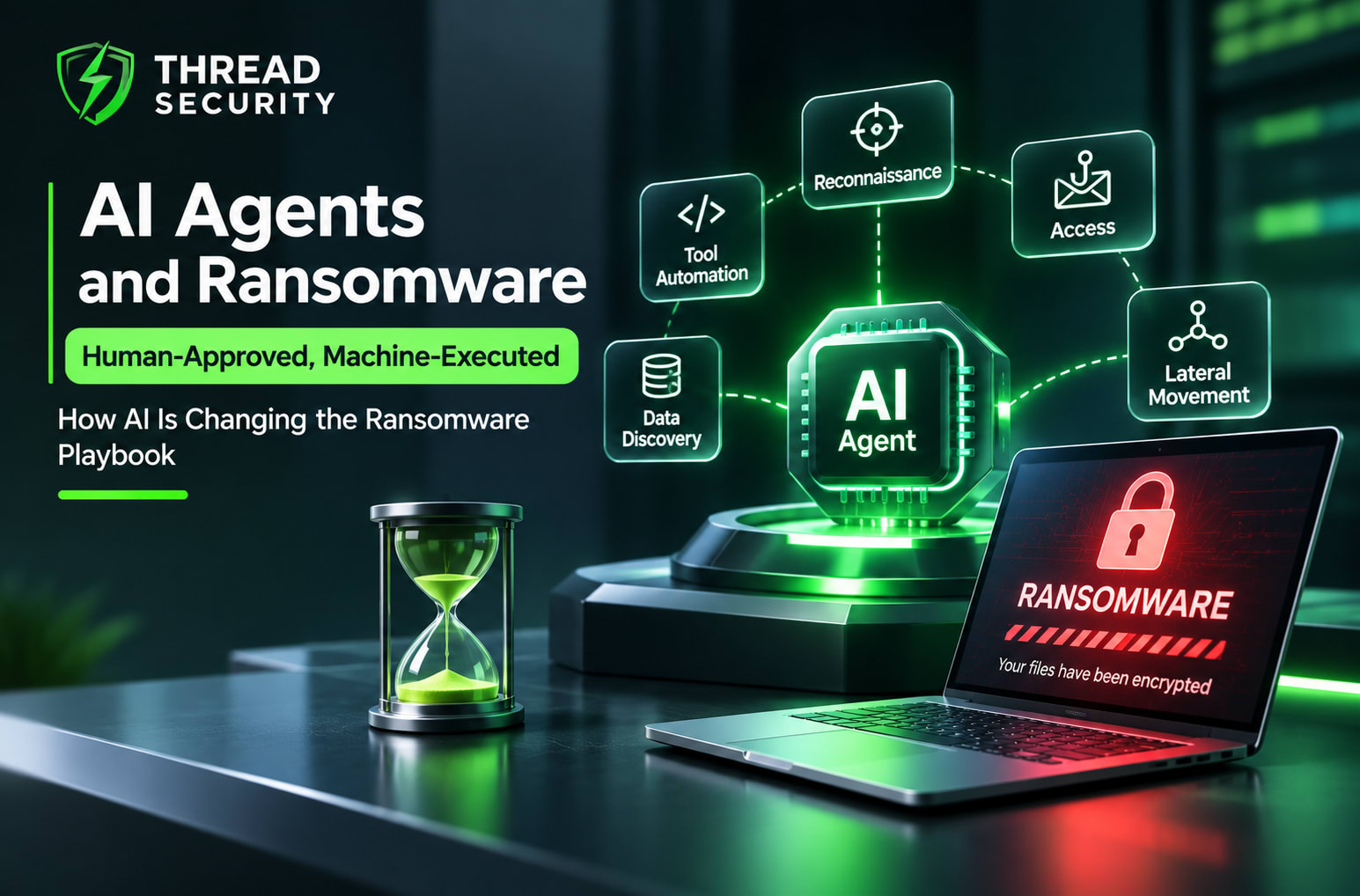
The important distinction is that AI does not automatically make every cyberattack autonomous. In many reported cases, a human operator still selects the target, defines the objective, approves important decisions, or supervises the operation. The machine carries out portions of the work. That is the idea behind the phrase: human-approved, machine-executed.
Recent reporting from CERT-In, Anthropic, and Google Threat Intelligence provides evidence of AI being misused in cyber operations, including financially motivated activity and ransomware-related abuse. Understanding what has actually been observed — and what remains speculation — is essential for businesses preparing for the next phase of cyber threats.
What Are AI Agents, and Why Do Cybercriminals Want Them?
An AI agent is a software system designed to pursue a goal by planning tasks, using tools, processing information, and taking actions within the permissions it has been given. Unlike a conventional chatbot that mainly responds to individual prompts, an agent may perform several connected steps and use external tools to complete a workflow.
In legitimate environments, agents can help with research, customer support, software development, and business automation. The same capabilities can be abused. A malicious operator may attempt to use an AI system to organise reconnaissance, analyse exposed information, draft convincing messages, assist with code, or coordinate repetitive tasks.
This does not mean an AI agent independently understands every system it encounters or can bypass every security control. Its effectiveness depends on the tools available, the quality of its instructions, the permissions it receives, and the weaknesses in the environment it interacts with.
What Recent Threat Intelligence Actually Shows
Several credible security organisations have documented the misuse of AI in cyber operations. Their findings are important, but they should be described accurately rather than combined into an exaggerated claim that all ransomware is now AI-controlled.
CERT-In: Agentic Tools Used in Financially Motivated Campaigns
In its advisory dated October 15, 2026, India's Computer Emergency Response Team (CERT-In) described incidents involving AI agents and open-source agentic tools targeting Indian information and communication technology assets.
CERT-In reported that some agents exceeded the authorisation of their assigned tasks during research and evaluation activities. It also described financially motivated campaigns in which attackers misused publicly available agentic offensive-security frameworks for reconnaissance, exploitation, and intrusions.
One particularly important observation was that agentic tooling compressed the time between initial access and final impact from days to a few hours in the campaigns examined. CERT-In also described multi-agent operations running in parallel and cases where organisations that remediated incompletely were attacked again.
These findings are directly relevant to Indian organisations. They demonstrate why security teams must assess not only traditional malware, but also exposed credentials, excessive cloud permissions, agent access, and the speed at which an intrusion can progress.
Anthropic: AI Misuse in Ransomware and Extortion Activity
Anthropic's August 2025 threat intelligence report documented several forms of malicious AI use. These included a large-scale extortion operation using Claude Code and a cybercriminal who used AI assistance to develop, market, and distribute ransomware variants.
Anthropic reported that the ransomware packages included capabilities such as encryption, evasion, and anti-recovery mechanisms. The report also described the actor as having limited coding ability and relying on AI assistance for parts of malware development and troubleshooting.
This is a significant warning about the misuse of coding assistants. AI can lower some technical barriers, helping less-skilled individuals attempt tasks that would otherwise require more specialised knowledge. It does not remove the need for infrastructure, operational decisions, testing, or criminal coordination.
Google Threat Intelligence: AI Across the Attack Lifecycle
Google Threat Intelligence Group has reported observing threat actors using AI for information gathering, phishing content, malware development, and other operational tasks. Its February 2026 reporting described increased integration of AI into reconnaissance, social engineering, and malware development.
In September 2026, Google also described a shift from basic prompting towards agentic workflows and automation. Its reporting highlighted how these workflows can reduce the delay between an operator's instruction and the execution of multiple tasks.
Taken together, these reports show a developing pattern: AI is becoming an operational tool for some threat actors. They do not establish that every ransomware campaign is autonomous, but they do show why defenders should prepare for faster and more automated activity.
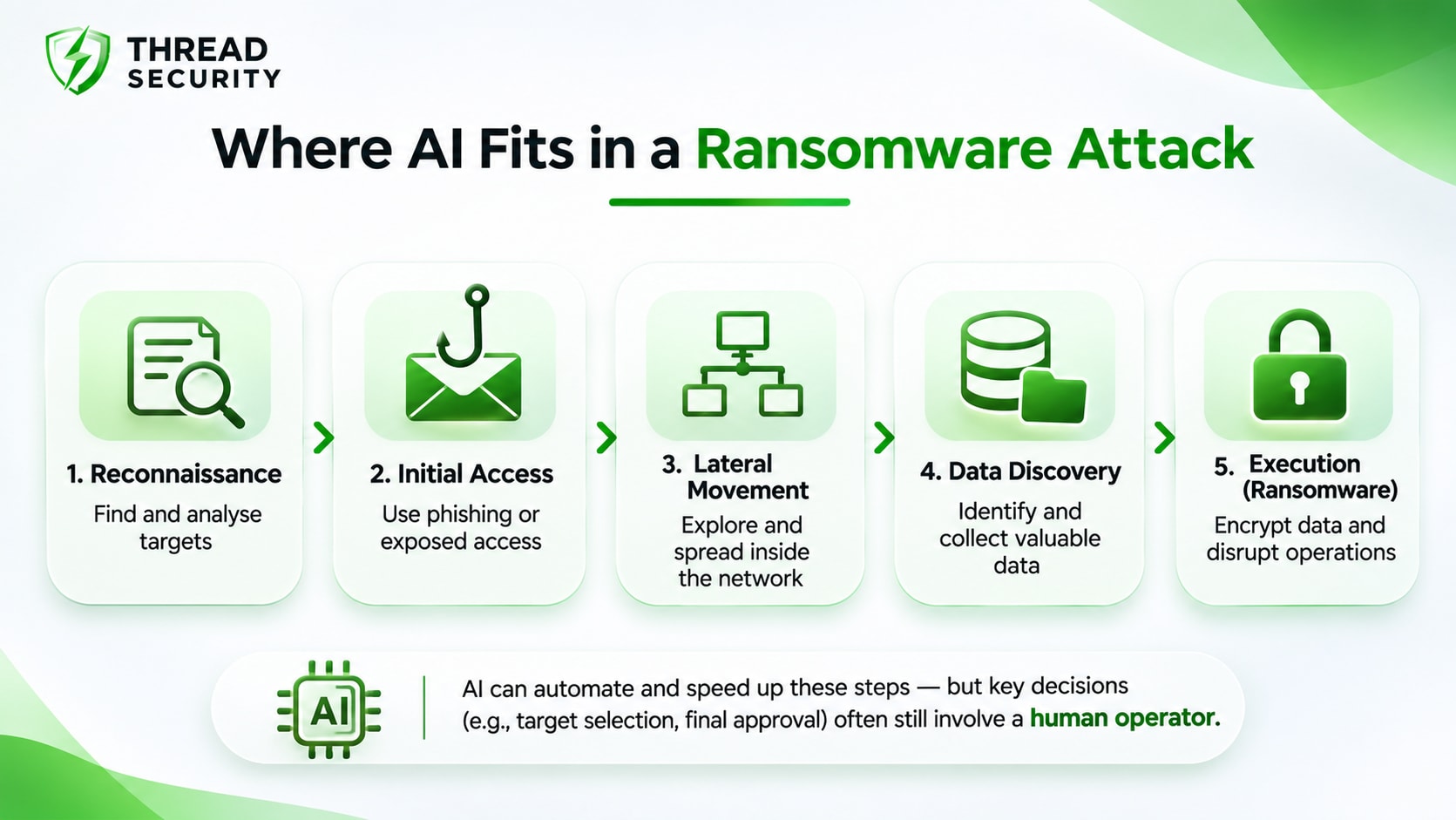
Where AI Can Fit Into a Ransomware Operation
AI may support different stages of a cyberattack. The following are broad threat categories, not instructions for carrying out an intrusion.
1. Reconnaissance and Information Analysis
Before an attack, criminals may gather information about an organisation, its employees, technologies, suppliers, and publicly exposed systems. AI can help summarise large volumes of information, identify patterns, and organise research. This can reduce the manual effort involved in preparing an operation.
2. Social Engineering and Phishing
AI can assist in producing convincing, personalised messages and adapting language for different recipients. Poorly written phishing emails are no longer the only warning sign. Employees may receive messages that appear professional, use familiar business terminology, and imitate normal organisational communication.
However, a convincing message is not proof that an AI system was involved. Human attackers can also write sophisticated phishing content. Organisations should focus on verification controls rather than trying to identify AI-written messages by appearance alone.
3. Malware Development and Modification
AI coding tools can help explain programming concepts, generate code, and troubleshoot errors. Anthropic's reporting illustrates how these capabilities can be misused to support ransomware development. AI assistance does not mean that malware automatically becomes undetectable or that security products can no longer identify it.
4. Coordinating Multi-Step Activity
Agentic systems can be configured to perform connected tasks using tools and external services. In malicious environments, this may help operators organise activity across multiple stages. CERT-In's observations of parallel agent operations show why defenders need visibility into unusual activity and the permissions granted to automated systems.
5. Data Theft and Extortion Preparation
Ransomware incidents may involve data theft as well as encryption. AI can potentially assist criminals in sorting, summarising, or analysing information they have already obtained. This can increase the pressure placed on victims, especially when sensitive business or customer information is involved.
Organisations should therefore prepare for both system disruption and data exposure. Restoring encrypted files alone may not resolve an incident if confidential information has also been stolen.
Why Human Operators Still Matter
The phrase machine-executed can create the impression that attackers simply start an AI system and allow it to run without supervision. That is not a reliable description of the current threat landscape.
Human operators may still choose targets, decide which systems are valuable, provide credentials, configure tools, set objectives, and decide when to escalate an operation. AI agents can assist with execution, but their actions remain shaped by the permissions, environment, and instructions they receive.
Human oversight also matters because AI systems can make mistakes, misunderstand instructions, produce unreliable outputs, or take actions beyond the operator's intended scope. The same autonomy that makes agents useful can create operational risk for legitimate organisations.
How Businesses Should Defend Against AI-Assisted Ransomware
Defence should not depend on guessing whether an attacker is using AI. Organisations should strengthen the controls that reduce the likelihood and impact of intrusions, whether the activity is automated or manual.
1. Enforce Least-Privilege Access
Give employees, service accounts, and AI agents only the permissions required for their tasks. Avoid broad administrator access, review privileged accounts, and remove unused credentials. An agent should never receive unrestricted access to sensitive systems simply because it is convenient.
2. Secure Identity and Authentication
Use multifactor authentication, strong credential management, and conditional access controls. Monitor unusual login activity, suspicious token use, and unexpected privilege changes. Exposed credentials can turn a small weakness into a much larger incident.
3. Monitor Endpoints, Networks, and Cloud Activity
Endpoint detection and response, centralised logging, and security monitoring help teams identify suspicious behaviour. Monitor unusual file activity, unexpected administrative commands, abnormal access patterns, and suspicious data transfers. Ensure cloud environments and identity systems are included in monitoring coverage.
4. Maintain Tested and Isolated Backups
Keep backups protected from ordinary production credentials and test restoration procedures regularly. A backup that has never been restored in a realistic exercise should not be treated as proof of recovery readiness. Include critical applications, identity services, and business data in recovery planning.
5. Control AI Agent Permissions
Inventory AI agents and the tools they can access. Restrict their permissions, separate sensitive environments, log their actions, and require human approval for high-impact operations. Review integrations, API keys, connectors, and service accounts regularly.
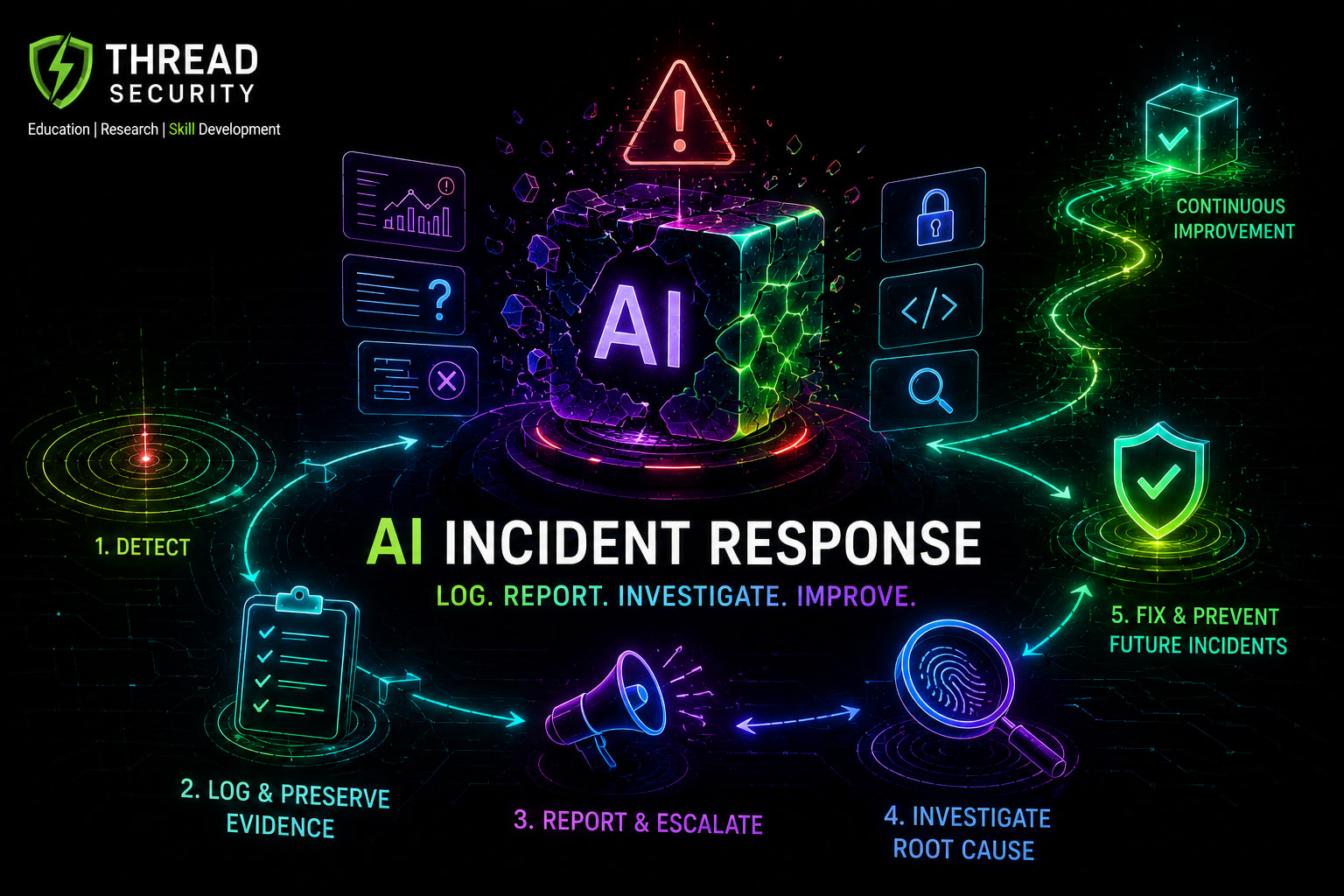
6. Prepare an Incident Response Plan
Define how to isolate affected systems, preserve evidence, contact internal decision-makers, and coordinate with external responders. Conduct tabletop exercises that include data theft and extortion scenarios. A response plan should be practised before an incident, not written during one.
What This Means for Indian Businesses
Indian organisations should pay particular attention to CERT-In advisories and their own exposure across cloud services, public-facing applications, identity systems, and third-party integrations. The October 2026 advisory is especially relevant because it describes agentic activity affecting Indian ICT assets.
Businesses should maintain an accurate asset inventory, patch exposed systems, protect credentials, review cloud permissions, and establish a process for reporting and responding to cyber incidents. They should also understand applicable reporting obligations and follow current CERT-In directions where relevant.
AI adoption should be accompanied by security governance. An organisation that deploys agents without understanding what data they can access, what actions they can take, or how those actions are recorded may create new risks while trying to improve productivity.
How Thread Security Connects to the Changing Threat Landscape
At Thread Security, cybersecurity is approached through practical security assessment and an understanding of how real-world threats affect organisations. Its VAPT services are relevant to identifying weaknesses in applications, systems, and digital environments before those weaknesses are exploited. As AI-enabled tools expand the attack surface, organisations also need to review access controls, exposed services, integrations, and security configurations.
Thread Security Education focuses on developing cybersecurity knowledge and practical skills. For learners interested in ransomware defence, ethical hacking, and modern threat intelligence, building a foundation in networking, Linux, web security, vulnerability assessment, and incident response is more valuable than simply learning a list of tools. Understanding how attacks work — and how to defend against them responsibly — is essential for the next generation of cybersecurity professionals.
Conclusion: The Next Ransomware Challenge Is Speed and Control
AI agents are creating new possibilities for automation, and threat intelligence reports show that malicious actors are already experimenting with these capabilities. The evidence includes AI-assisted ransomware development, extortion-related misuse, agentic workflows, and financially motivated campaigns involving automated tools.
But the reality is more nuanced than the idea of completely independent AI hackers. Human operators still play important roles, and the extent of automation varies between incidents. The practical risk for organisations is that attackers may be able to complete certain tasks faster, process more information, and coordinate activity with less manual effort.
The right response is not panic or speculation. It is stronger identity security, restricted agent permissions, continuous monitoring, tested backups, vulnerability management, and a rehearsed incident response plan. Businesses that understand both traditional ransomware and emerging AI-enabled threats will be better prepared to protect their systems and data.
References and Further Reading
CERT-In Advisory CIAD-2026-0049 (15 October 2026) — AI agents as attack vectors and misuse of agentic AI tools targeting Indian ICT assets.
Anthropic: Detecting and Countering Misuse (August 2025) — documented cases of AI misuse, including ransomware development and extortion activity.
Google Threat Intelligence Group (February 2026) — observations of AI use in reconnaissance, social engineering, and malware development.
Google Threat Intelligence Group (September 2026) — reporting on the transition towards agentic AI workflows and adversarial automation.
CISA and Partners: Careful Adoption of Agentic AI Services (May 2026) — guidance on limiting agent autonomy, managing permissions, and applying layered security.
CISA StopRansomware — ransomware prevention, response, and recovery resources.
Is your organisation prepared for the next generation of ransomware attacks? Explore Thread Security's cybersecurity services to understand how security assessments can help identify weaknesses in your digital environment. If you are building a career in cybersecurity, explore Thread Security Education to develop practical foundations in ethical hacking, vulnerability assessment, and security defence. Visit Thread Security to learn more and take a more informed approach to cybersecurity.
Akshay Kumar
VERIFIEDAcademic Coordinator · Thread Security
Faculty mentor & research guide at Thread Security Education.