When a Picture Becomes Part of the Attack
AI-generated phishing is changing how cybercriminals construct believable digital identities. A convincing profile photograph, a professional-looking résumé or a seemingly genuine company website can make a fraudulent interaction appear legitimate before a victim has even opened a suspicious attachment. Generative AI has made it easier to create and modify these visual elements at scale.
This is not simply a story about fake photographs. It is about how attackers combine images, professional identities, social media profiles, websites and carefully written messages to build trust. Cybersecurity researchers have documented North Korea-linked operations that use AI-generated or AI-enhanced images as part of deceptive employment and phishing activity.
One particularly relevant example comes from Kaspersky's reporting on a Lazarus-linked campaign known as Operation FlashHole. Researchers described spear-phishing messages that directed targets towards fabricated portfolio and résumé websites, including a page featuring an AI-generated photograph of a purported job seeker.
The important distinction is that an AI-generated photograph does not independently prove who created a campaign or who operated it. Attribution depends on the wider technical evidence, infrastructure and investigation. Understanding that distinction is essential when discussing real-world cyber threats.
What Is AI-Generated Phishing?
Traditional phishing attempts often depend on deceptive emails, fake login pages or messages designed to create urgency. AI-generated phishing adds another layer: artificial or modified visual content that helps an attacker construct a believable person, business, recruiter or professional opportunity.
Generative AI tools can produce realistic portraits, modify backgrounds, improve photographs and create visual material for websites and documents. These capabilities have legitimate applications in design, marketing and communication. However, the same technology can be misused to support identity fraud and social engineering.
A fabricated profile might include a professional headshot, a convincing biography, an employment history, a portfolio and links to developer accounts. When these elements are consistent with one another, a recipient may be less likely to question the identity behind them.
The photograph is therefore only one component of the deception. Attackers can use it to support a larger narrative that makes a fake recruiter, job candidate, company representative or technical expert appear credible.
Inside Lazarus-Linked Activity: Operation FlashHole
Kaspersky reported on a Lazarus-linked campaign called Operation FlashHole that used AI and other techniques in a targeted attack against organisations in South Korea. The research described spear-phishing emails containing links to fabricated portfolio and résumé websites tailored to individual targets.
One of the websites, according to Kaspersky's investigation, included an AI-generated photograph of a purported job seeker. The page was designed to resemble a professional profile rather than an obviously malicious destination. This matters because attackers can use familiar professional settings to reduce suspicion.
The campaign also involved malicious activity associated with South Korean CrossWeb EX software. Kaspersky researchers described a possible infection process involving the software and reported the use of a new loader called ClientHub alongside an updated LPEClient tool.
The researchers also discussed the use of AI to tailor fraudulent websites to their targets. This demonstrates how visual content can fit into a broader spear-phishing strategy: the attacker does not necessarily need to persuade a victim through one message alone. A sequence of apparently relevant professional interactions can gradually establish credibility.
Operation FlashHole should not be interpreted as proof that all Lazarus campaigns use AI-generated photographs, or that every fake job profile belongs to Lazarus. It is a specific investigation and should be understood within the evidence Kaspersky published.

Beyond Lazarus: North Korea-Linked Fake Professional Identities
Other research has documented similar misuse of AI-generated and AI-enhanced images in North Korea-linked activity. Microsoft's Security team published research in June 2025 describing the evolving tactics of a group it tracks as Jasper Sleet, associated with North Korean remote IT worker operations.
Microsoft described how fraudulent workers can use stolen or rented identities, fabricated résumés, social media accounts and developer profiles to apply for remote jobs. The research also discussed AI-assisted tools used to improve images and modify photographs for professional-looking profiles and identity documents.
In the material Microsoft examined, AI image tools such as FaceSwap were used to place photographs into identity documents or create more professional-looking profile images. The wider operation involved more than a photograph: fake employment histories, online accounts, portfolios and other supporting material helped create a digital persona.
Expel has also reported on North Korea-linked activity involving fake companies and professional identities. Its research described AI-generated headshots used on fabricated company websites and cases where images of real people were taken from social media. This is a useful reminder that not every deceptive photograph is entirely synthetic. Stolen and altered real photographs can be just as misleading.
These investigations concern related but distinct threat activity. They should not be combined into a claim that one actor carried out every campaign. The common lesson is that visual identity can be exploited as part of a wider social engineering operation.
Why AI-Generated Photos Make Social Engineering More Convincing
People routinely use photographs to make quick judgments about identity. A profile picture may influence whether someone accepts a connection request, replies to a recruiter or trusts a person claiming to represent a company.
Attackers can exploit this normal behaviour. A polished photograph may create an impression of professionalism, while a matching résumé and credible-looking website reinforce the impression. The recipient may focus on the apparent opportunity instead of independently checking the person behind it.
AI tools can also reduce the effort needed to produce different versions of a persona. A background can be changed, a photograph can be enhanced, and a profile can be adapted to suit a particular industry or audience. This can make fraudulent identities look more consistent across several platforms.
However, realistic images do not automatically make phishing successful. Attackers still need a convincing reason to contact the victim, a way to maintain the interaction and a malicious objective. That objective may involve stealing credentials, delivering malware, collecting sensitive information or gaining access to an organisation.
How a Fake Identity Can Become a Cybersecurity Incident
A deceptive photograph can be the opening element in a longer attack chain. The following sequence illustrates how a fraudulent professional identity might be used. It is a general explanation of social engineering, not a claim that every stage occurred in every Lazarus-linked campaign.
Identity creation: An attacker creates or modifies a profile photograph and builds a fictional professional identity.
Digital footprint: The profile is supported with a biography, employment history, portfolio, website or social media accounts.
Initial contact: The attacker approaches a target through email, a professional networking platform or a messaging service.
Trust building: The interaction is made to appear relevant to the victim's role, interests or business responsibilities.
Malicious request: The target may be asked to open a document, visit a website, download a project file or share confidential information.
Compromise: Depending on the campaign, the victim may expose credentials, execute malware or provide access that can be abused.
This sequence explains why organisations should not treat a profile photograph as a reliable identity check. A convincing image can support a false story, but it cannot verify employment, professional experience or authority to request access.
How to Identify AI-Generated and Manipulated Profile Photos
There is no universally reliable visual trick that can identify every AI-generated image. Image-generation technology continues to improve, and photographs can also be manipulated using conventional editing tools. AI-image detectors may produce false positives or false negatives, so their results should not be treated as definitive proof.
Instead of relying on a single visual clue, examine the wider context:
Check the person's history: Look for a consistent professional presence over time rather than relying on a recently created profile.
Verify employment independently: Contact the organisation through its official website or a known business contact, not through details supplied by the suspicious profile.
Inspect profile consistency: Compare names, job titles, employment dates, portfolio links and professional claims across independent sources.
Reverse-search the photograph: A reverse image search may reveal whether a photograph has appeared elsewhere under another name. A lack of results does not prove that it is genuine.
Be cautious with unusually polished profiles: A professional photograph is not evidence of fraud, but it should not replace verification of the person's claims.
Check the website carefully: Review the domain, contact information and links. A professional design does not establish that a business or recruiter is legitimate.
Verify unexpected requests: Confirm unusual document, payment, credential or software requests through a separate trusted communication channel.
Visual inspection is useful as an initial warning, not as a final decision-making method. A real person's photograph can be stolen, while an AI-generated image may be used for a harmless purpose. The surrounding evidence matters more than appearance alone.
How Businesses Can Reduce AI-Powered Phishing Risks
Businesses should treat identity verification as part of their cybersecurity controls, especially during recruitment, vendor onboarding, financial approvals and requests for access to internal systems.
1. Strengthen recruitment verification
Recruitment teams should verify candidate identities and employment claims through established processes. Technical assessments should be conducted through controlled environments. Candidates should not be asked to run untrusted code on company devices, and employees should not download unknown files simply because they appear to come from a recruiter or applicant.
2. Establish trusted communication channels
Employees should independently verify unexpected requests involving credentials, payments, sensitive documents or system access. Use contact information already held in company records rather than replying to an email or calling a number included in a suspicious message.
3. Apply access controls
Multi-factor authentication, least-privilege access and controlled permissions can reduce the impact of compromised accounts. Organisations should also review privileged access regularly and remove accounts that are no longer required.
4. Train employees to recognise social engineering
Cybersecurity awareness training should include fake recruiter profiles, suspicious portfolio links, fraudulent vendor identities and AI-assisted impersonation. Employees need practical guidance on how to report suspicious interactions without being discouraged from raising concerns.
5. Monitor and respond to suspicious activity
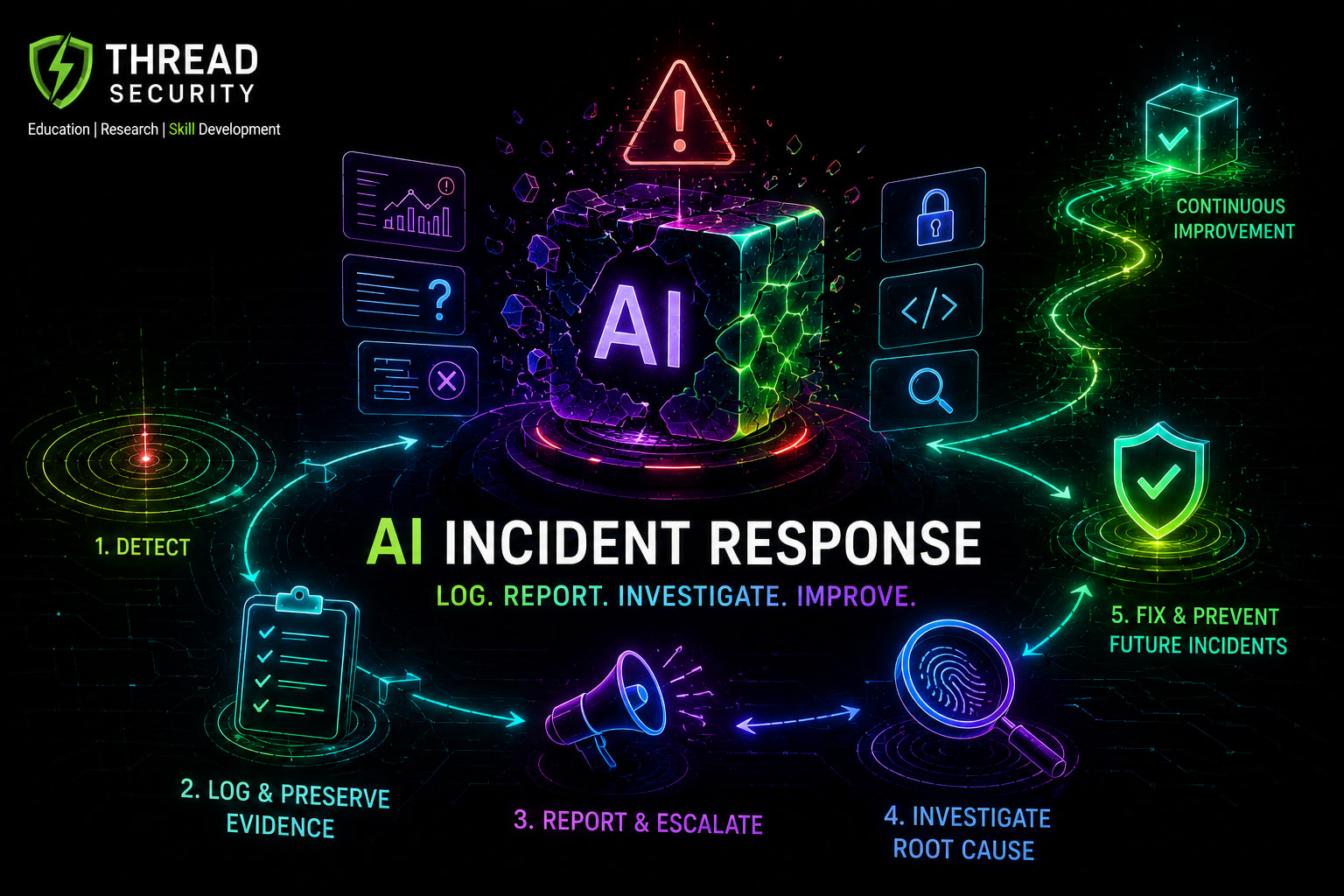
Security teams should monitor unusual login patterns, suspicious links, unexpected software execution and abnormal account activity. A suspected phishing incident should trigger a documented response process, including account protection, evidence preservation and appropriate escalation.
Why AI Detection Alone Is Not Enough
Some security products and online services claim to identify AI-generated images. These tools may be useful as one source of evidence, but organisations should avoid treating a detector score as a verdict.
Detection can be affected by compression, resizing, filters, screenshots and editing. A photograph may also combine genuine and synthetic elements. As a result, an image detector cannot establish whether a person is who they claim to be, whether an email is legitimate or whether a website is safe.
A stronger approach combines identity verification, email security, endpoint protection, access management, employee awareness and incident response. These controls address the broader attack rather than focusing only on the photograph.
For security teams, the practical question should not be limited to whether an image was generated by AI. They should also ask: Is this person authorised to make the request? Does the website belong to the claimed organisation? Is the requested action normal for this business process? Can the request be independently verified?
The Bigger Picture: Trust Is Becoming an Attack Surface
AI-generated images are part of a wider change in digital deception. Attackers can combine synthetic photographs with AI-assisted writing, fabricated portfolios, cloned websites and other tools to create a more convincing identity. The technology does not eliminate the need for social engineering; it can make the social engineering more believable.
Research from Microsoft, Kaspersky and other security organisations demonstrates that AI-assisted identity fabrication is not merely theoretical. It has appeared in documented campaigns and fraudulent employment operations. At the same time, attribution must remain precise: a technique observed in one North Korea-linked operation should not automatically be attributed to every other group.
For individuals, the lesson is straightforward: do not trust a person solely because their photograph looks authentic. For organisations, the challenge is broader. Trust should be established through verified identity, controlled access and repeatable business processes, not through a polished profile or a convincing online presence.
Conclusion
The rise of AI-generated photographs has made digital impersonation easier to scale and harder to judge by appearance alone. Lazarus-linked Operation FlashHole and other North Korea-linked operations show how fabricated professional identities and AI-enhanced imagery can support phishing and deceptive recruitment activity.
But the solution is not to distrust every photograph or rely on an AI detector to make the decision. It is to verify identities independently, inspect suspicious requests, protect accounts and train employees to recognise social engineering. In cybersecurity, a convincing image is still only an image. It is not proof of identity.
How Thread Security Connects to This Threat
As AI-generated content becomes more accessible, cybersecurity awareness and practical security skills are increasingly important for individuals and organisations. Thread Security focuses on cybersecurity-related services, including security awareness, cybersecurity training and vulnerability assessment and penetration testing (VAPT). Through Thread Security Education, learners can build their understanding of cybersecurity concepts, threats, defensive practices and the responsible use of technology. Understanding AI-assisted phishing, digital impersonation and social engineering is relevant to anyone working with online platforms, business systems or sensitive information. Organisations should evaluate their own security requirements and select appropriate assessment and training measures based on their risk exposure.
References and Further Reading
Kaspersky – Lazarus campaign using AI and post-quantum encryption. Research on Operation FlashHole, including AI-generated imagery, tailored fraudulent websites and the associated technical activity. Read the Kaspersky research.
Microsoft Security Blog – Jasper Sleet: North Korean remote IT workers' evolving tactics. Research published June 30, 2025, describing fabricated professional identities, AI-enhanced images and remote IT worker operations. Read Microsoft's analysis.
Expel – Inside Lazarus: How North Korea uses AI to hit developers. Research discussing fabricated companies, AI-generated headshots and malicious activity targeting developers. Read Expel's research.
Google Cloud / Mandiant – Threat Actors are Interested in Generative AI, but Use Remains Limited. Research on the use of generative AI imagery in deceptive personas and influence operations. Read the Mandiant analysis.
Recorded Future – PurpleDelta's Fraudulent Employment Operations. Research into fabricated North Korea-linked IT worker personas, including the use of AI-generated profile photographs. Read Recorded Future's report.
Want to understand how modern phishing attacks work and how to defend against them? Explore cybersecurity learning and security-related services from Thread Security and Thread Security Education. Build practical awareness of social engineering, digital identity risks and defensive security practices, and take a more informed approach to protecting your personal or organisational digital environment. Visit Thread Security to learn more.
Akshay Kumar
VERIFIEDAcademic Coordinator · Thread Security
Faculty mentor & research guide at Thread Security Education.