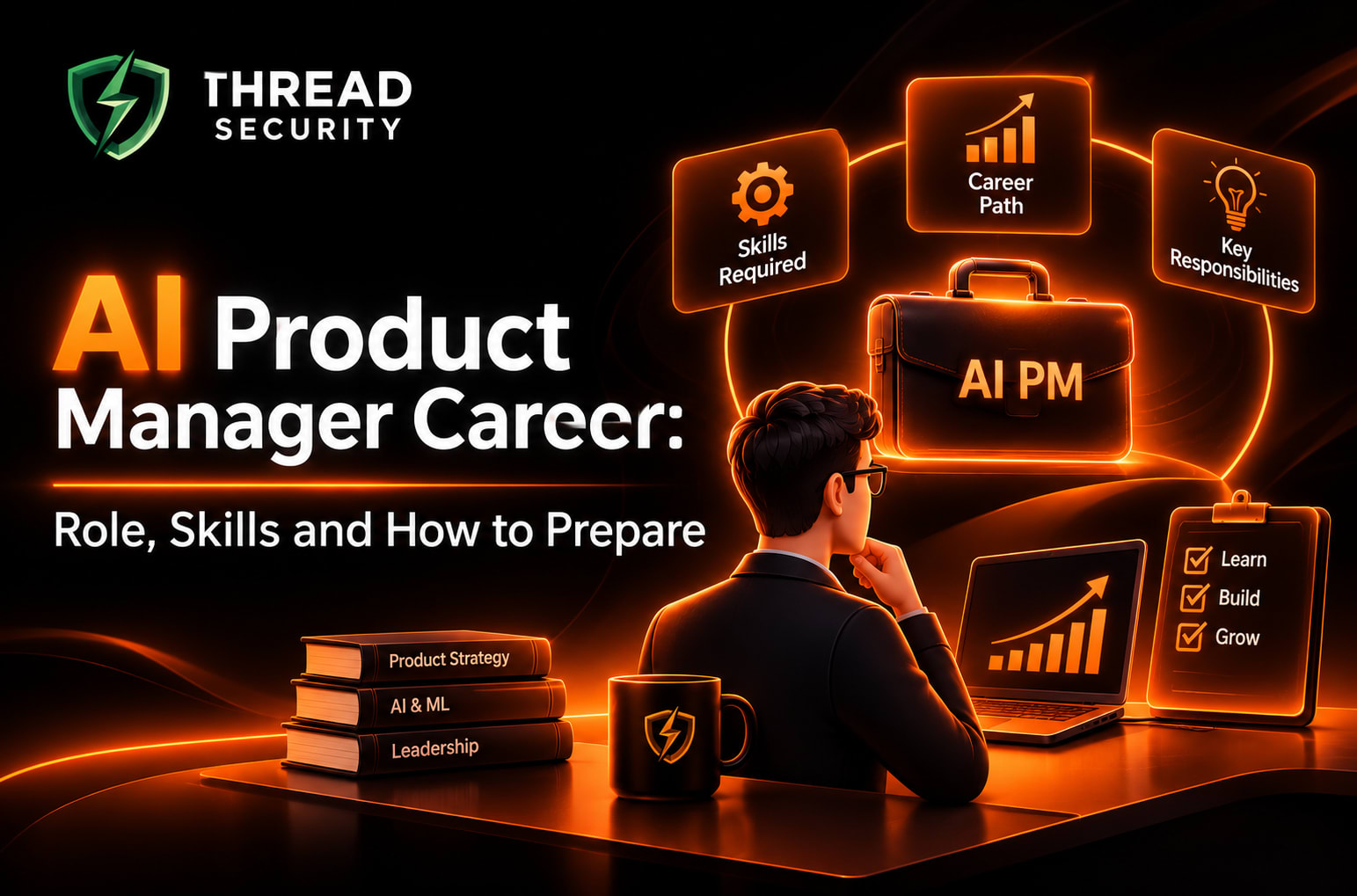
Understanding the AI Product Manager Career
AI product manager career opportunities are growing as organizations move beyond experimenting with artificial intelligence and begin integrating AI into real products and business operations. However, building an AI-powered feature is not simply a matter of choosing a machine learning model and putting it into an application. Someone must first understand the problem, decide whether AI is actually needed, define what the product should achieve, coordinate the teams involved and evaluate whether the final solution is useful and safe.
This is where an AI Product Manager becomes important. The role connects business objectives, customer expectations, technical possibilities and product outcomes. An AI Product Manager does not necessarily train models or write production code. Instead, the person helps determine what should be built, why it should be built, how success will be measured and what risks must be considered before and after launch.
If you are interested in artificial intelligence but also enjoy problem-solving, planning, communication and decision-making, this role is worth understanding. Let's examine what the job involves, the skills required and how a beginner can start preparing.
1. What Does an AI Product Manager Actually Do?
An AI Product Manager is responsible for guiding the development and improvement of products or features that use artificial intelligence. The role combines traditional product management with an understanding of AI systems, their capabilities and their limitations.
Consider an organization planning to build an AI-powered customer support assistant. Developers may focus on the architecture, engineers may work on integrations, and data specialists may evaluate the underlying model. But several important questions need answers before development begins:
What problem are customers experiencing?
Would an AI assistant solve that problem better than an existing solution?
Which tasks should the assistant handle, and which should go to a human?
How accurate and reliable must its responses be?
How will the organization measure whether the product is successful?
What happens if the assistant gives incorrect or inappropriate information?
The AI Product Manager helps bring these questions together and guides the teams towards a product decision. The responsibility is not to promise that AI can do everything. It is to identify where AI can provide meaningful value and where its limitations require a different approach.
2. The Five Major Responsibilities of an AI Product Manager
A. Product Discovery: Finding the Right Problem
Product discovery is the process of understanding users, their problems and the opportunities that may be worth addressing. It should happen before a team commits significant time and resources to development.
For example, imagine an e-commerce company receiving hundreds of customer queries every day. The initial suggestion may be to build an AI chatbot. However, discovery could reveal that most queries concern order tracking, refund status and delivery updates. A simpler automated tracking system might solve a large part of the problem without requiring a complex conversational AI product.
An AI Product Manager may conduct user interviews, study customer feedback, examine existing workflows, analyze competitor products and identify the problems that occur most frequently.
Key question: Are we solving a genuine user problem, or are we simply adding AI because it is currently popular?
B. Defining Requirements: Turning Ideas into Clear Instructions
Once a problem has been identified, the next responsibility is to define what the product should do. Requirements help designers, developers, data scientists and other stakeholders work towards the same outcome.
For an AI-powered document summarization feature, requirements might include:
Users should be able to upload supported document formats.
The system should generate a summary containing the main points.
The output should identify information that may be uncertain or missing.
Users should be able to review the original document alongside the summary.
The system should handle unsupported or corrupted files appropriately.
Sensitive documents should be processed according to the organization's privacy and security requirements.
Requirements should also explain what the system will not do. For example, a summarization tool may not be designed to provide legal advice or make decisions about a person's eligibility for a service.
Clear boundaries reduce confusion during development and help prevent unrealistic expectations.
C. Defining Metrics: Measuring Whether the Product Works
A product is not successful simply because it uses an advanced AI model or receives positive feedback during a demonstration. Its performance must be evaluated against clearly defined objectives.
An AI Product Manager works with technical and business teams to select relevant metrics. These may include:
Task success rate: How often does the product complete the intended task correctly?
Response time: How long does the system take to respond?
User adoption: How many intended users actually use the feature?
Retention: Do users continue using the product over time?
Cost per task: How much does it cost to complete an AI-powered operation?
Human escalation rate: How often does the system need a person to take over?
Technical metrics also matter. Depending on the product, teams may examine accuracy, precision, recall, error rates, hallucination rates or model performance across different user groups.
The important point is that metrics must match the product's purpose. A customer support assistant, a fraud detection system and an AI writing tool should not all be evaluated using the same success criteria.
D. Risk Review: Understanding What Could Go Wrong
AI products introduce risks that may not be present in conventional software, or may appear in different forms. An AI Product Manager needs to ensure that these risks are discussed during product planning and development, rather than only after a problem occurs.
Common areas of risk include:
Incorrect outputs: The system may produce confident but inaccurate information.
Bias: Model behavior may disadvantage certain users or groups.
Privacy: Personal or confidential information may be exposed or handled improperly.
Security: Users may attempt to manipulate the system or access information they should not see.
Unpredictable behavior: The same input may not always produce identical outputs.
Overdependence on automation: Users may trust AI decisions without checking important results.
Risk review involves identifying possible failures, estimating their impact, defining safeguards and deciding when human intervention is necessary.
For example, an AI assistant that suggests a restaurant can tolerate a different level of error from an AI system that supports medical or financial decisions. The consequences of incorrect outputs should influence the level of testing, monitoring and human oversight.
E. Stakeholder Management: Keeping Everyone Aligned
AI products are rarely developed by one person or one department. An AI Product Manager regularly works with multiple stakeholders, including:
Business teams: Define organizational goals, budgets and commercial priorities.
Designers: Plan the user experience and product interface.
Developers and engineers: Build the application and integrate its components.
Data scientists and ML engineers: Evaluate data, models and technical performance.
Security and legal teams: Review privacy, compliance and security concerns.
Customers and users: Provide feedback about real-world needs and product experience.
The product manager must communicate decisions clearly, manage competing expectations and make sure that technical work remains connected to the original user problem.
This is particularly important in AI projects because a technically impressive solution may still fail if it is too expensive, difficult to use, unreliable or disconnected from business needs.
3. Does an AI Product Manager Need to Know Coding?
Coding can be useful, but it is not a universal requirement for every AI Product Manager position. The role is not the same as that of an AI engineer or machine learning developer.
However, having no technical understanding can create problems. An AI Product Manager should be comfortable discussing concepts such as:
Machine learning and deep learning fundamentals.
Large language models and generative AI.
Training data, testing data and data quality.
Model evaluation and common performance metrics.
APIs, databases and basic software architecture.
Retrieval-Augmented Generation (RAG) and AI application workflows.
Model limitations, hallucinations and responsible AI practices.
Basic Python knowledge can help when exploring datasets, testing APIs or understanding technical demonstrations. But the main objective is not to become the person who writes every line of code. It is to understand enough to ask informed questions, evaluate trade-offs and make sound product decisions.
4. Skills Required to Prepare for the Role
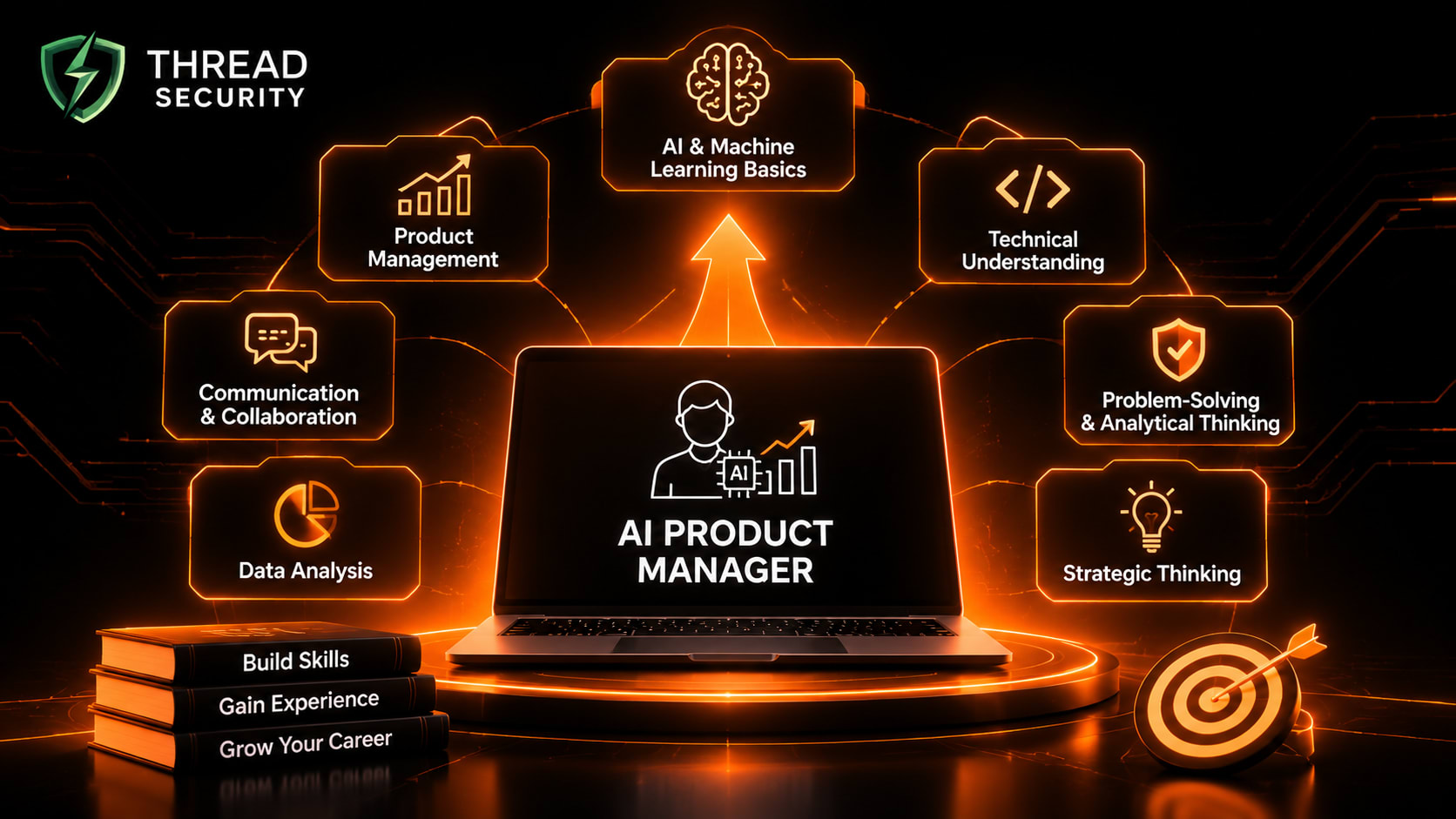
Preparing for an AI Product Manager role requires a combination of product, technical and communication skills.
Skill Area | What You Should Learn | Why It Matters |
|---|---|---|
Product thinking | User problems, product goals and prioritization | Helps decide what should be built and why. |
AI fundamentals | ML, LLMs, RAG and model limitations | Helps evaluate technical possibilities and constraints. |
Data literacy | Metrics, datasets and evaluation | Helps measure product performance. |
Communication | Writing, presentations and stakeholder discussions | Keeps different teams aligned. |
Risk awareness | Privacy, bias, security and reliability | Supports safer product decisions. |
Project coordination | Roadmaps, timelines and prioritization | Helps move work from planning to delivery. |
You do not need to master every skill before starting. A practical learning approach is to build product knowledge alongside AI fundamentals and gradually apply both to realistic product problems.
5. How to Start Preparing for an AI Product Manager Career
If you are a student, recent graduate or professional exploring this field, begin with a structured learning path.
Step 1: Understand Product Management Basics
Learn how products are planned, prioritized, developed, launched and improved. Understand concepts such as user personas, customer journeys, product roadmaps, user stories and minimum viable products (MVPs).
Step 2: Build a Foundation in AI
Study how machine learning works, what generative AI can do, how large language models are used and why AI systems sometimes produce unreliable outputs. You should be able to explain these concepts in simple language.
Step 3: Study Existing AI Products
Choose products such as AI writing assistants, recommendation systems, customer support assistants or document analysis tools. Examine their target users, core features, limitations and possible improvements.
Step 4: Practice Writing Product Requirements
Take a problem and convert it into a clear product proposal. Define the intended users, the problem, the expected solution, key features, success metrics and risks.
Step 5: Build a Product Portfolio
Document your product thinking through case studies, product briefs, feature improvement proposals and simple prototypes. A portfolio gives recruiters something concrete to evaluate beyond a list of courses or certificates.
6. Practical Starter Exercise: Create a One-Page AI Product Brief
Reading about product management is useful, but you will understand the role better when you try making product decisions yourself.
Your challenge: Imagine that a college wants to introduce an AI-powered student support assistant. The assistant should help students find information about attendance policies, examination schedules, course details and common administrative questions.
Your task is to prepare a one-page AI product brief. You do not need to build or code the actual application.
What Your Product Brief Must Include
Product name: Give your proposed AI product a clear name.
Problem statement: What difficulty are students currently facing?
Target users: Who will use the product?
Proposed AI solution: What should the assistant do?
Core features: List three to five important features.
Success metrics: How will you know whether the product is useful?
Risks and limitations: What could go wrong, and how should the product respond?
Human involvement: Which questions or situations should be transferred to college staff?
Example of a Product Decision
Suppose a student asks, "Can I sit for my examination if my attendance is below the required percentage?" The assistant should not invent an answer or make an official eligibility decision. It should refer to verified institutional information and direct the student to the appropriate college authority when the situation requires individual review.
This small example demonstrates an important product management principle: defining what an AI system should not do is just as important as defining its features.
Expected Deliverable
One-page AI product brief in PDF or document format.
A clearly defined problem and target audience.
Three to five proposed product features.
At least three measurable success indicators.
At least three risks with possible safeguards.
Evaluation criteria: Problem clarity, practical feasibility, relevance of AI, quality of metrics, risk awareness and clarity of communication.
7. Common Misunderstandings About AI Product Management
Before pursuing this career, it is useful to separate realistic expectations from common misconceptions.
Myth: An AI Product Manager must be an expert programmer.
Reality: Technical understanding is important, but the role primarily focuses on product direction, coordination and decision-making.Myth: Every product should include AI.
Reality: AI should be used when it provides a meaningful advantage over simpler alternatives.Myth: A successful AI demo means the product is ready.
Reality: A demonstration does not prove reliability, scalability, security or real-world usefulness.Myth: Product management is only about managing developers.
Reality: It also involves user research, business decisions, prioritization, measurement and risk management.Myth: A certificate alone is enough to enter the field.
Reality: Practical product thinking, technical understanding and demonstrable work are important parts of preparation.
8. Career Opportunities and Where the Role Can Lead
AI Product Management is not limited to one industry. Organizations developing or adopting AI-powered products may need people who can connect technical capabilities with customer and business requirements.
Depending on experience and the organization's structure, related roles may include:
Associate Product Manager
AI Product Analyst
Product Analyst
Technical Product Manager
AI Product Manager
Generative AI Product Manager
Product Strategy Associate
AI Solutions Consultant
These titles are not interchangeable, and the responsibilities vary between organizations. Entry-level candidates may find it more realistic to begin with product analyst, associate product or related roles before moving into a dedicated AI Product Manager position.
There is no guaranteed career path or fixed timeline. Your opportunities will depend on your practical skills, product experience, technical understanding and the requirements of individual employers.
9. How AI Courses and Practical Training Can Help
Learning AI concepts through theory is a useful starting point, but product-focused preparation requires more than knowing the names of machine learning algorithms or generative AI tools.
A useful learning programme should help students understand how AI systems work, explore real-world use cases, evaluate model outputs, identify limitations and communicate technical decisions. It should also include practical exercises where learners define a problem, propose a solution and explain how its success will be measured.
For students exploring AI courses in Jalandhar, it is worth comparing programmes based on their practical content, project work, instructor expertise, learning outcomes and exposure to current AI applications. Do not select a course simply because its title includes popular terms such as Generative AI or Agentic AI.
At Thread Security Education, the focus is on practical, industry-oriented learning in artificial intelligence and emerging technologies. Learners can explore foundational AI concepts, machine learning workflows and applied AI projects to build a stronger understanding of how AI technologies are used in real-world settings.
The objective is to develop technical understanding and problem-solving ability that can support different career directions, including AI development, AI application building and product-oriented roles.
Frequently Asked Questions
1. What is an AI Product Manager?
An AI Product Manager guides the planning and development of AI-powered products. The role involves understanding user problems, defining requirements, coordinating teams, measuring performance and reviewing risks.
2. Can a fresher become an AI Product Manager?
It is possible, but dedicated AI Product Manager positions may require prior product or technical experience. Freshers can build relevant skills through product case studies, internships, practical projects and entry-level roles such as product analyst or associate product manager.
3. Does AI Product Management require coding?
Not always. Coding is not a universal requirement, but understanding Python basics, APIs, machine learning concepts and AI workflows can help a product manager communicate effectively with technical teams.
4. What should I learn first for AI Product Management?
Start with product management fundamentals, user research, problem definition and prioritization. Then build knowledge of machine learning, generative AI, data evaluation, product metrics and responsible AI practices.
5. What should an AI Product Manager portfolio contain?
A useful portfolio can include AI product briefs, product requirement documents, user research summaries, feature improvement proposals, product roadmaps and case studies explaining how you would evaluate an AI-powered product.
6. Is AI Product Management different from traditional Product Management?
The core responsibilities are similar, but AI Product Management requires additional understanding of data, model behavior, evaluation, uncertainty, privacy, bias and AI-specific risks.
Key Takeaways
AI Product Managers connect user needs, business objectives and technical capabilities.
Product discovery should identify a real problem before AI is selected as the solution.
Requirements must define both product capabilities and boundaries.
Metrics should measure real product outcomes, not just model performance.
Risk review, privacy, reliability and human oversight are important considerations.
A practical portfolio can demonstrate product thinking more effectively than certificates alone.
Creating a one-page AI product brief is a useful first exercise for anyone exploring this career.
Conclusion: Start Thinking Like an AI Product Manager
AI Product Management sits at the intersection of technology, business and user experience. It requires more than knowing which AI tools are popular. A good product manager must understand problems, question assumptions, communicate with technical teams, evaluate outcomes and recognize when AI is not the right solution.
If you are exploring an AI Product Manager career, start by studying existing AI products and asking why they were built, who they serve, how their performance is measured and what could go wrong. Then put your understanding into practice by creating a product brief of your own.
The ability to turn an unclear problem into a practical, measurable and responsible product proposal is one of the most useful skills you can begin developing today.
Explore practical AI learning with Thread Security Education. Build your understanding of AI technologies, work on applied projects and develop skills that connect technical knowledge with real-world problem-solving.
Learn more: Thread Security
Simranjit Kaur
VERIFIEDAI Trainer · Thread Security
Faculty mentor & research guide at Thread Security Education.