THE MONDAY MORNING THAT CHANGED THE RELEASE PLAN
At 9:15 on a Monday morning, a development team was preparing to release a major application update. The final tests were nearly complete, the product manager was waiting for approval, and the developers had already started discussing what they would build next.
Then the security scan finished.
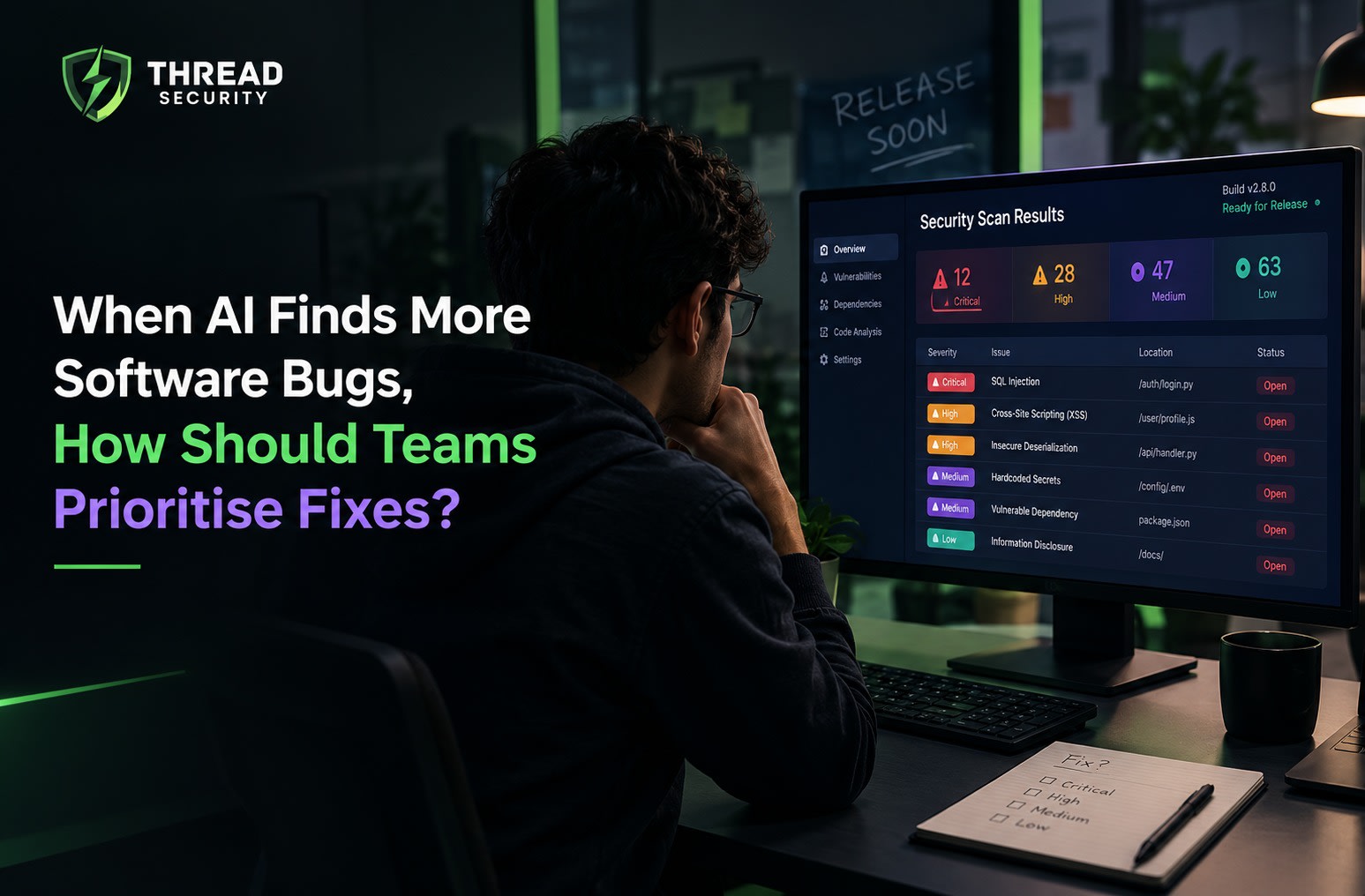
The AI-powered tool had flagged a possible authentication weakness, an outdated software dependency, an input validation issue, and several suspicious configuration settings. More findings appeared as the team expanded the scan to other parts of the application.
Within minutes, the release discussion had changed. The team was no longer talking about new features. Everyone wanted to know whether the application was safe to ship.
One developer suggested fixing the easiest issues first. Another argued that the team should address the findings marked critical by the scanner. The security engineer had a different question: which of these findings could actually put the application or its users at risk?
That question mattered more than the size of the report.
AI had helped the team discover potential problems, but it had not automatically determined which ones were genuine, which were exploitable, or which could cause the greatest damage.
This is becoming an important challenge in modern software security. As AI makes code analysis and vulnerability detection more accessible, teams can face more findings than they can reasonably investigate and fix at once.
The answer is not to ignore the alerts or attempt to clear every item before lunch. It is to understand what each finding means, verify the evidence, and make decisions based on risk.
For teams exploring AI-assisted security, resources and training opportunities through Thread Security Education can form part of a broader learning journey that connects technical knowledge with practical security judgement.
But first, the team in our story had a decision to make. And the wrong decision could leave the most important weakness untouched.
THE BUG THAT LOOKED SERIOUS — AND THE ONE THAT REALLY WAS
The security engineer opened two findings side by side.
The first concerned a problem in an internal reporting feature. It had received a concerning automated rating, but the affected component was accessible only to a limited group of authorised employees. Initial investigation suggested that the issue had little impact on sensitive information.
The second finding involved the application's authentication mechanism. Under certain conditions, a weakness in the way requests were handled might allow one user to access information belonging to another.
The second issue was more concerning, but the engineer did not immediately declare it a confirmed vulnerability. The team needed to inspect the relevant code, understand the application's configuration, and establish whether the behaviour could actually be reproduced.
This distinction is essential.
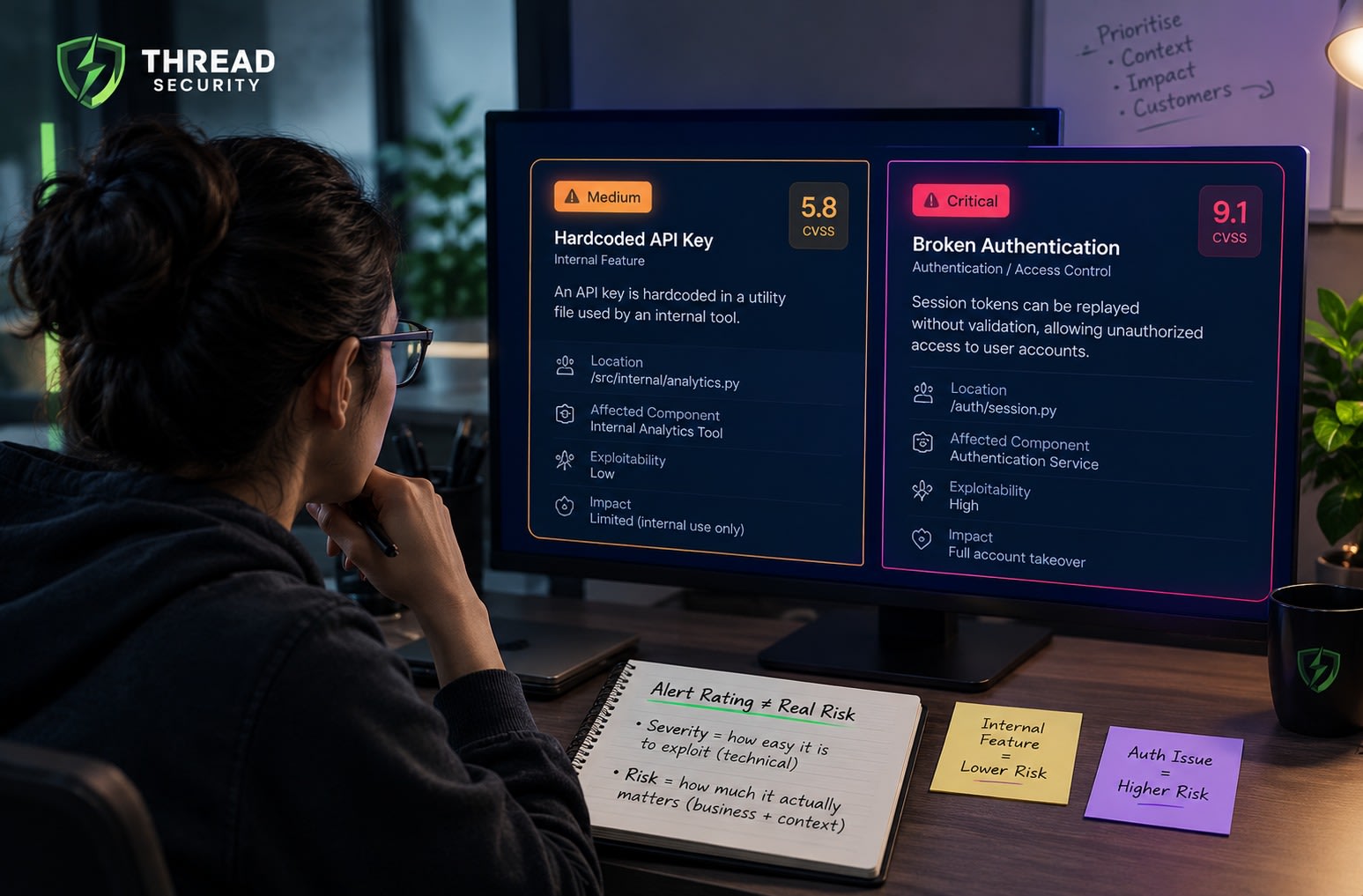
AI-generated security reports can contain genuine vulnerabilities, duplicate alerts, and false positives. A tool might flag a suspicious code pattern without understanding that another control prevents it from being exploited. Conversely, a seemingly minor weakness could become dangerous when combined with another flaw.
That is why a report containing hundreds of findings should not automatically be described as hundreds of confirmed vulnerabilities. Until the findings have been reviewed, the count represents potential issues requiring investigation.
The team began asking more useful questions.
How severe is the potential impact? Could exploitation expose customer records, compromise accounts, or disrupt an important service?
How exploitable is the weakness? Can an attacker realistically trigger it, and what privileges, access, or conditions would be required?
How exposed is the affected component? Is it accessible from the public internet, restricted to an internal network, or protected by additional controls?
How critical is the asset? Does the weakness affect a sensitive database, authentication service, payment system, or a less important development component?
Has the finding been validated? Can the team reproduce the behaviour, confirm the affected code path, and establish that the issue creates a genuine risk?
These five factors turn a vague list of alerts into a more useful picture of the application's security.
Frameworks such as the Common Vulnerability Scoring System (CVSS) help teams communicate technical severity, while the Exploit Prediction Scoring System (EPSS) estimates the likelihood that a published vulnerability will be exploited. Neither replaces an assessment of the actual environment.
For anyone learning vulnerability management, this is also where theory becomes practical. Understanding what a security tool reports is one skill; determining whether the finding represents a meaningful threat is another. Through threadsecurity.in, students can explore cybersecurity learning opportunities that support the development of practical technical foundations.
The engineer returned to the two findings. The decision was becoming clearer, but one more step was needed before the team could act.
THE FIVE-MINUTE DECISION THAT COULD SAVE WEEKS OF TROUBLE
The authentication issue was reproducible in a controlled test environment. The team confirmed that, under a specific set of conditions, a request could return information that should have remained restricted to another user.
The finding now had evidence behind it.
It also affected a production application that handled customer information. Although the team had not established that anyone had exploited the weakness, the combination of potential data exposure, application access, and confirmed behaviour made it the more urgent problem.
The reporting issue remained on the list, but it no longer competed for the same immediate attention.
The team decided to pause the release, investigate the authentication weakness, and identify an appropriate fix. The developers also reviewed whether temporary containment measures were necessary while the permanent correction was being prepared.
This was not a decision based on the scanner's score alone. It came from combining severity, exploitability, exposure, asset criticality, and validation.
That is the practical value of AI vulnerability prioritisation: using AI-generated findings as the starting point for informed decisions, rather than treating an automated ranking as the final answer.
It also explains why the highest-scoring issue is not always the first issue a team should fix. A vulnerability's technical severity matters, but so do the environment in which it exists, the likelihood of exploitation, and the consequences of leaving it unresolved.
The team assigned an owner to the authentication issue, established a remediation deadline appropriate to the risk, and communicated the release implications to the product manager. Lower-risk findings were documented, assigned, and scheduled rather than forgotten.
AI could still help by grouping related alerts, suggesting code changes, and generating tests. But each proposed fix needed review. A patch that removed one vulnerability while breaking access controls or creating another weakness would only exchange one problem for another.
By the time the release discussion resumed, the team had something more useful than a cleared dashboard: a defensible reason for its decision.
FROM DETECTION TO A FIX THAT ACTUALLY WORKS
The developers prepared a correction to the authentication logic. Before approving it, the security engineer reviewed the changes and tested the original failure scenario again.
The first test passed. The restricted information was no longer accessible through the vulnerable request.
But the team did not stop there.
It ran regression tests to check that legitimate users could still access their own information. It reviewed related authentication paths and repeated the relevant security checks to ensure the change had not introduced a new weakness.
Only after the evidence supported the correction did the team mark the issue as resolved.
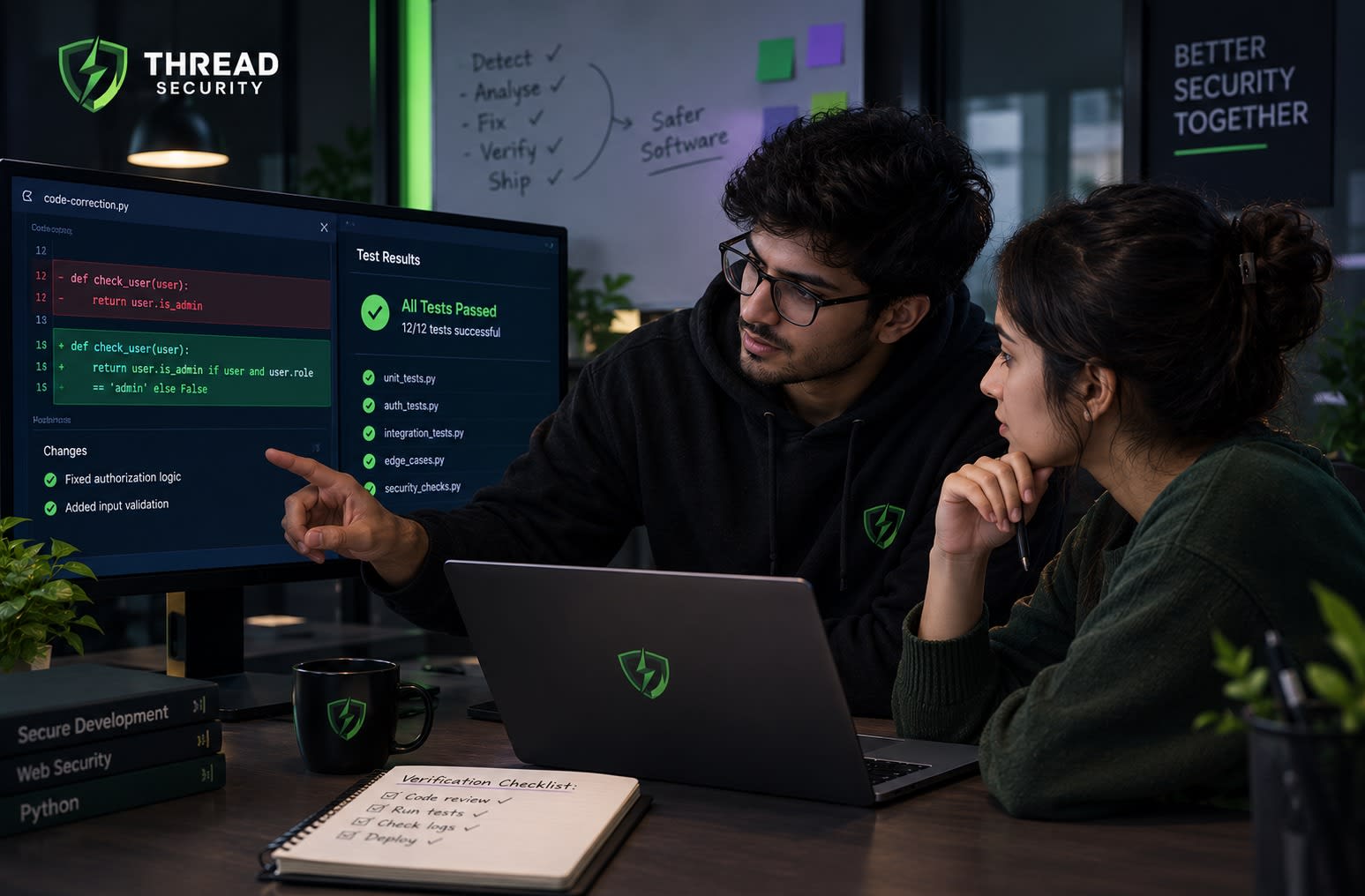
This final step is easy to underestimate. Detecting a vulnerability is not the same as fixing it, and writing a patch is not the same as proving that the patch works.
The team also recorded what had happened: how the issue was discovered, why it was prioritised, what changed, and how the correction was verified. That record would help the team respond more effectively if a similar issue appeared in another part of the application.
For organisations, the process offers a practical lesson. Security findings should have clear ownership, risk-appropriate deadlines, and a verification process. Critical issues may require immediate containment, while lower-risk issues can be addressed in planned development cycles. Priorities should be revisited whenever exposure changes or new information emerges.
The same principles matter to people entering cybersecurity. Real security work involves more than running scanners or memorising vulnerability categories. It requires understanding code, testing assumptions, evaluating evidence, and explaining why one issue deserves attention before another.
This is the kind of practical thinking that cybersecurity education should encourage. Through Thread Security Education, learners can explore relevant training programmes and build their foundations in security concepts and techniques. The objective is not simply to identify more weaknesses, but to develop the judgement needed to investigate and respond to them responsibly.
For further information about Thread Security and its cybersecurity work, visit threadsecurity.org.
THE REAL ADVANTAGE IS NOT FINDING MORE BUGS
By the end of the day, the team had not fixed every finding in the scanner's report. Some issues still needed investigation, others were scheduled for remediation, and a few had been ruled out after review.
Yet the team was in a better security position than it had been that morning.
It had confirmed a meaningful weakness, prioritised it according to its potential impact, corrected the problem, and verified the result. It had also established a clearer process for handling the remaining findings.
That is what success looks like when AI enters the security workflow.
The goal is not to produce the longest vulnerability report, achieve a dashboard full of green indicators, or treat every automated alert as an emergency. The goal is to reduce genuine risk without losing sight of the people, systems, and information the software is meant to protect.
As AI continues to accelerate software analysis, the gap between finding a problem and understanding it will become increasingly important. Teams that combine automation with technical expertise, careful validation, and clear ownership will be better equipped to manage that gap.
And for the next generation of cybersecurity professionals, the lesson is worth remembering: a tool may tell you where a bug could be hiding, but sound security judgement helps determine what happens next.
Because in the end, the team that fixes the most bugs is not necessarily the team that becomes the most secure. The real advantage belongs to the team that knows which bug matters most, why it matters, and how to prove it has been fixed.
Gurmehak Kalra
VERIFIEDAI Technical Associate · Thread Security
Faculty mentor & research guide at Thread Security Education.