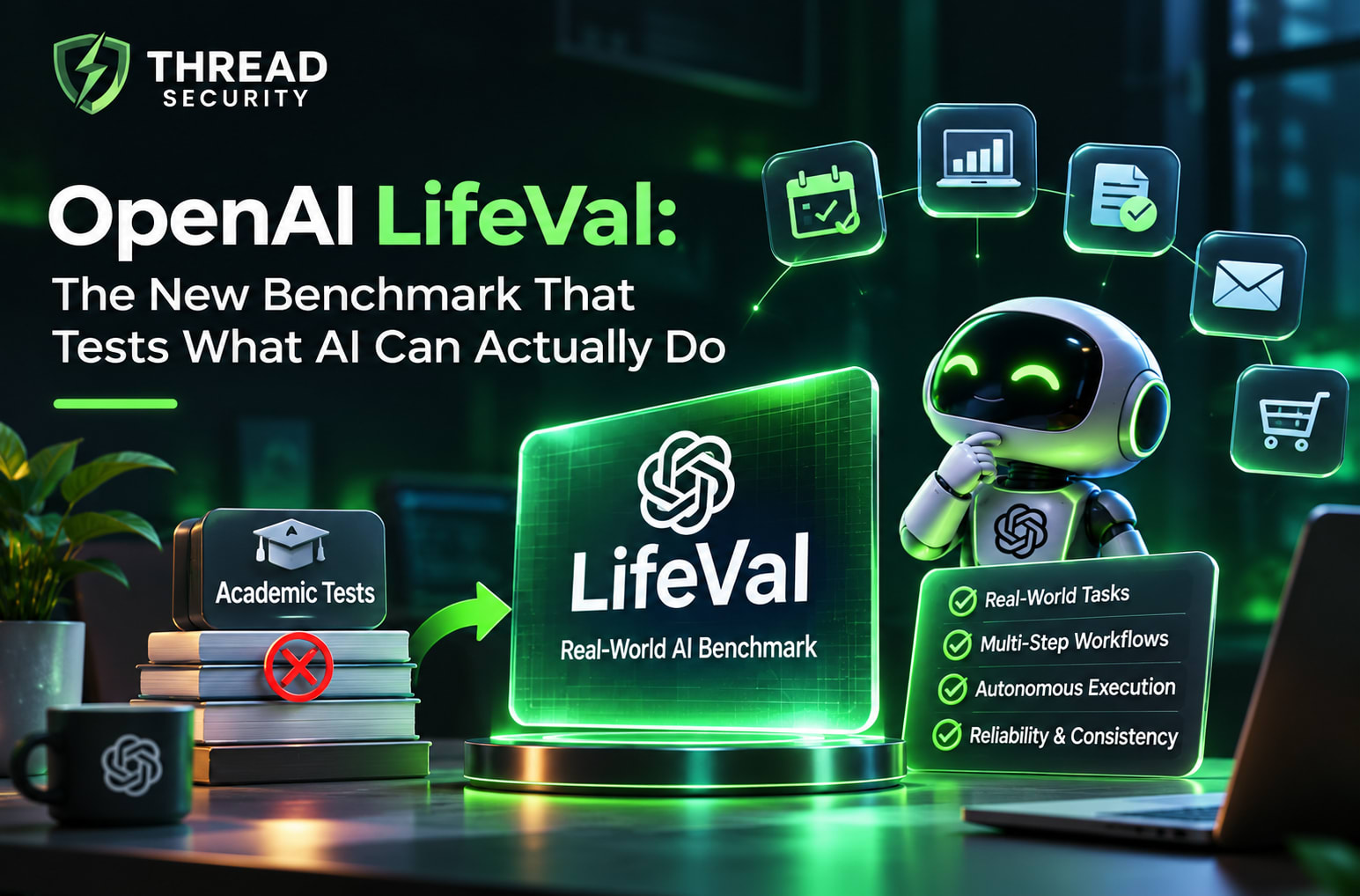
LifeSciBench is OpenAI\u2019s new benchmark for testing whether AI can do the work of a life-science researcher, not just answer exam-style questions about biology. Published on June 17, 2026, LifeSciBench replaces tidy multiple-choice quizzes with 750 open-ended research tasks written by PhD-level scientists. The headline result is humbling: the best model tested passed only about one task in three. This guide explains what LifeSciBench measures, how it is graded, what the leaderboard shows, and why the results matter for students, researchers, and anyone building or buying AI tools.
What Is LifeSciBench?
LifeSciBench is an evaluation suite that measures how useful AI models are on realistic life-science research problems. Most earlier biology benchmarks work like standardized exams: a question, a few answer options, and one correct choice. Real research is messier. Scientists reconcile conflicting results, design experiments with incomplete information, troubleshoot failed assays, and decide what to do next. LifeSciBench was built to capture that kind of open-ended judgment, which is exactly where AI claims tend to be hardest to verify.
How the Benchmark Is Built
The benchmark contains 750 tasks that span seven biological domains and seven research workflows, from genomics and medicinal chemistry to clinical and translational science. The tasks were authored by 173 scientists who hold doctorates and have hands-on experience moving drug programs forward in biotech or pharma. A separate group of expert reviewers then validated the tasks for realism and quality before they were accepted. Many tasks also include attachments such as figures, PDFs, tables, sequence files, and chemical structure files, so a model must read real scientific material rather than a neat text prompt.
How LifeSciBench Grades AI
The grading approach is what makes LifeSciBench technically interesting. Instead of matching a final answer against a key, every task has a detailed rubric that breaks the ideal response into specific claims, calculations, caveats, and decisions. Across the full benchmark there are roughly nineteen thousand individual rubric criteria, or about twenty-five per task. A model earns partial credit for each criterion it meets, and a task counts as passed only when the response clears 70 percent of the available points. This produces two useful numbers: a normalized rubric score that rewards partial progress, and a stricter task pass rate that reflects whether the answer is genuinely usable.
LifeSciBench Results: What the Leaderboard Shows
In the first published comparison, OpenAI\u2019s life-sciences model GPT-Rosalind led with a pass rate of 36.1 percent. GPT-5.5 followed at 25.7 percent, Gemini 3.1 Pro at 23.6 percent, GPT-5.4 at 20.7 percent, and Grok 4.3 at 13.0 percent. Models were tested in a single-turn setting with browsing allowed. The aggregate numbers hide some nuance, because different models won on different tasks. Still, a large share of the benchmark remains out of reach: no tested model passed a sizeable block of tasks at all, which shows the benchmark is far from saturated.
The Data File Gap
The most practical finding is not the headline score. It is what happens when a task requires reading an attached file. GPT-Rosalind\u2019s pass rate fell from about 45 percent on text-only tasks to about 28 percent on tasks with at least one artifact, a drop of roughly 17 points. This matters because scientific signal rarely lives in plain prose. It sits in figures, assay outputs, spreadsheets, and sequence or structure files. A model that handles text well but stumbles on data files has a gap exactly where the real information lives.
Where AI Is Strong and Where It Struggles
The results point to a clear pattern. Frontier models do best at structured judgment tasks such as scientific communication, translation, and evidence synthesis, where the output format is stable and the goal is to organize and explain. They struggle most with design, optimization, prediction, and quantitative analysis. Exact-output tasks were especially hard: numeric tasks and tasks requiring precise sequences or structures, such as CRISPR or siRNA design, produced the lowest pass rates, because a small error can make an answer useless in the lab.
The Conflict-of-Interest Question
There is an important caveat. OpenAI designed and administered LifeSciBench, and its own model sits at the top of the leaderboard. A score published by a vendor about its own system is not the same as independent validation, and critics have pointed out that industry-built benchmarks can favor their creators. OpenAI added safeguards, including externally written tasks and multiple rounds of expert review, but outside researchers will still need to examine the task set and methodology. Readers should treat the rankings as informative, not final.
What LifeSciBench Means for Practitioners
For research teams and enterprise buyers, the benchmark works as a calibration tool rather than a verdict. It suggests leaning on AI for literature synthesis, protocol drafting, and structured scientific writing, while keeping a human firmly in the loop for experimental design, quantitative analysis, and anything that depends on reading data files correctly. For students learning AI evaluation, LifeSciBench is also a strong case study in rubric-based grading, task design, and the importance of questioning who built a benchmark and why.
Conclusion
LifeSciBench shows how far AI still has to go before it can act as a reliable scientific collaborator. A top pass rate of 36.1 percent is not a failure or a triumph; it is an honest measurement of today\u2019s limits. The biggest lesson is the data file gap: reliability drops sharply once models must interpret the figures and files where science actually happens. Until independent teams confirm the results and real labs test these systems over time, the safest view is that AI is a useful assistant, an unreliable authority, and not yet ready to work unsupervised.
Nardeep Singh
VERIFIEDAI/ML Associate · Thread Security
Faculty mentor & research guide at Thread Security Education.