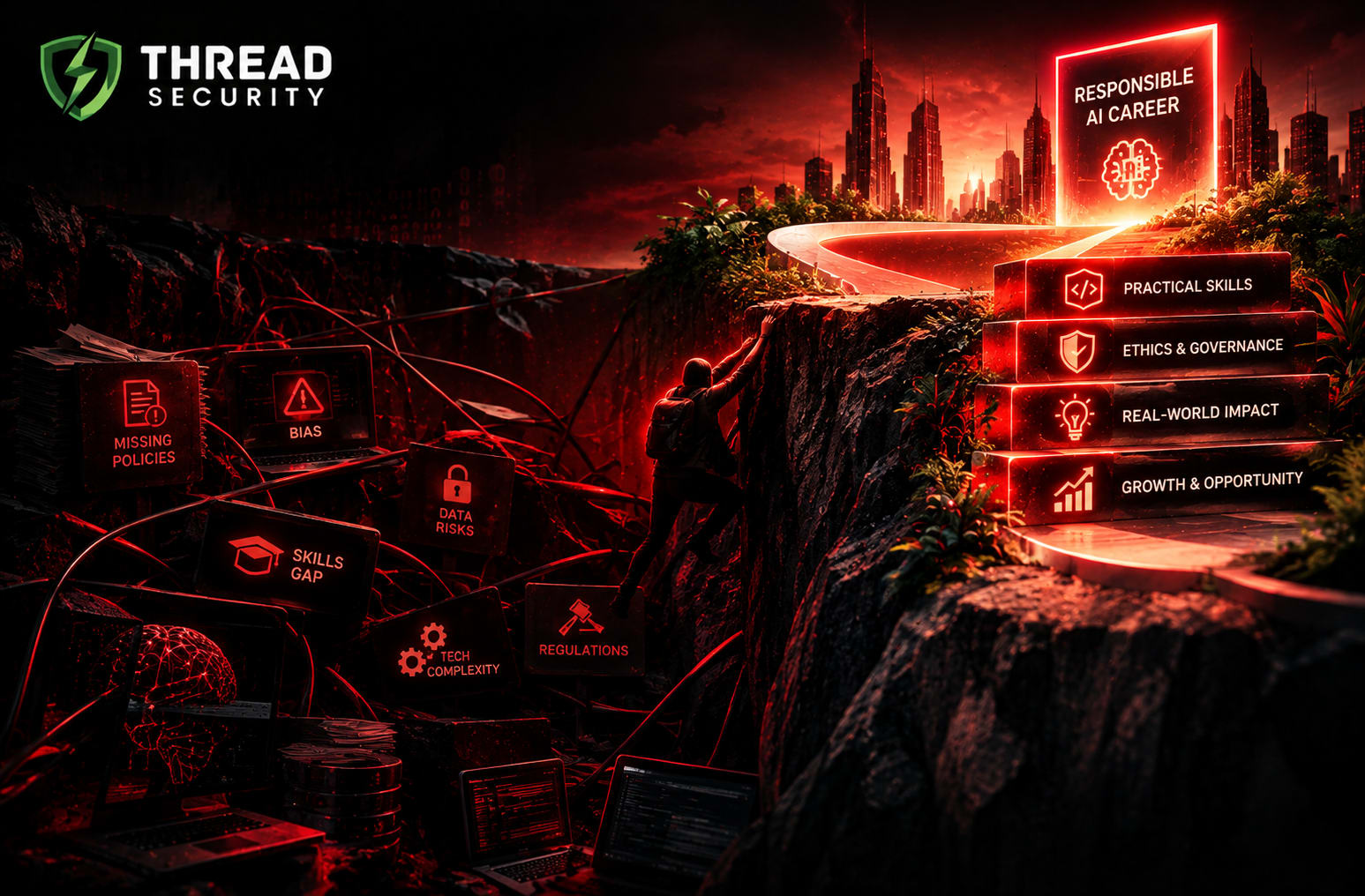
Responsible AI Is Now a Job, Not a Slogan
Being responsible in an AI career is not just about writing a policy PDF that reads "fair, safe, transparent and accountable," it's about doing it in practice. The need has been quantified. According to this report from Stanford's AI Index 2026, the AI Incident Database (AIDb) counted 362 incidents in 2025, compared to 233 incidents in 2024. AI-specific governance positions increased by 17 percent in 2025 and the percentage of businesses with no responsible AI policy decreased from 24 percent to 11 percent in the same period, the same chapter found.
Fortunately, if you are new to the game, this is a field where skills are more important than the stars. Here are six that you can begin to work on this week, an hour-long practice to do as a group, and a candid assessment of the state of the field and the areas that need improvement.
Why now: Demand, Policy and a Skills gap
Incidents are rising. The 362 incidents above are an actual record of incidents, not a forecast. Despite organizations starting to formalize responsible AI work, gaps in knowledge and budget continue to hold them back, Stanford adds. A skills gap is a vacancy.
India has a National Framework. On 5 November 2025, MeitY published the India AI Governance Guidelines, which includes seven guiding principles (sutras), six pillars of recommendations and an action plan. According to analysis by law firms, the approach is non-prescriptive and complementary to the existing laws, meaning it is expected that employers will implement these principles.
Pay respect to accountability and governance of privacy and AI. According to Captain Compliance, the median salary among AI governance professionals was $151,800, and more than $169,700 for professionals who handled both privacy and AI.
The 6 Practice Skills for a Responsible AI Career
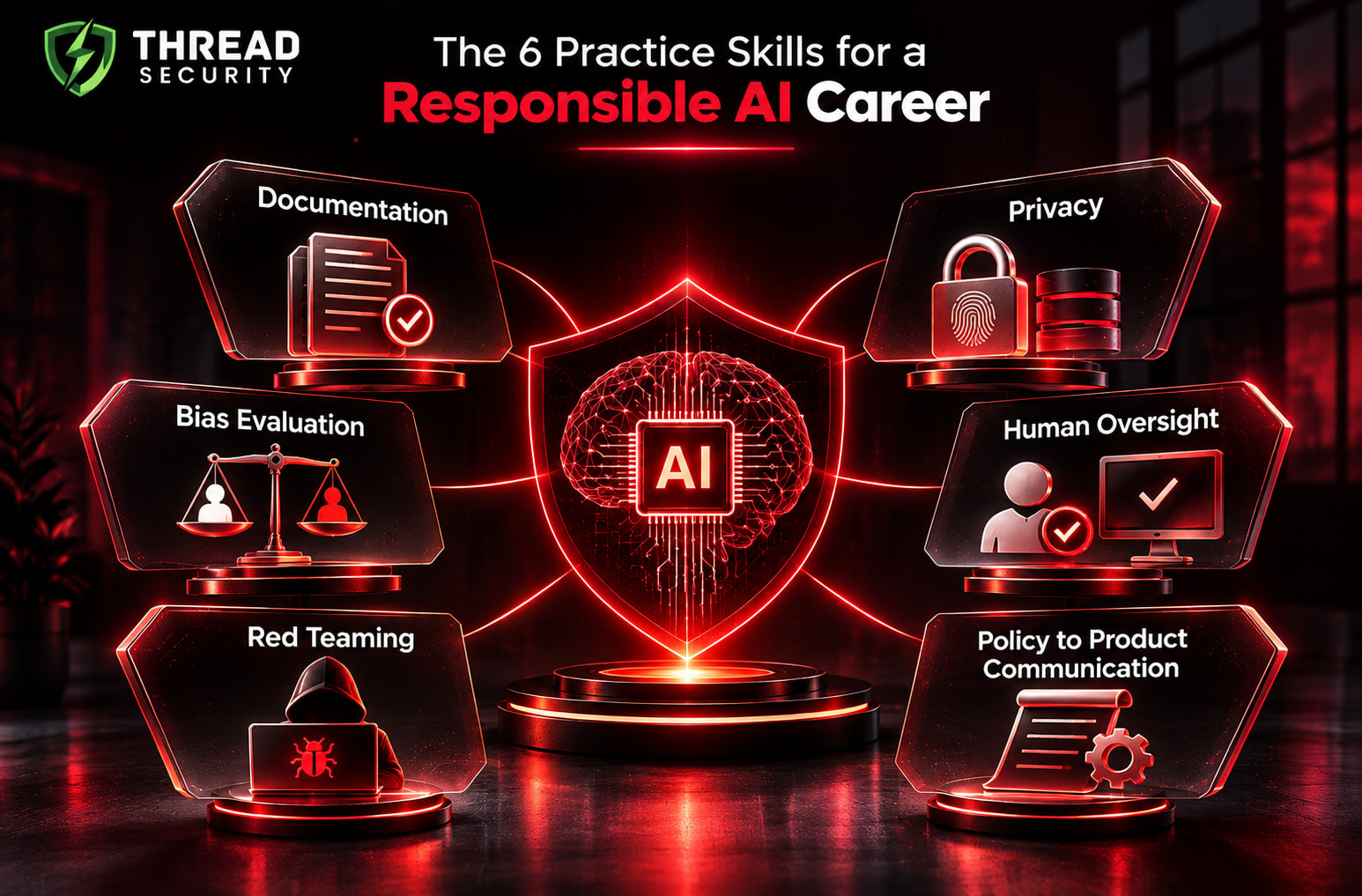
Documentation: Record Information about What the System is and is not
Documentation is the least Interesting, but most useful skill. It involves documenting a model's purpose, training data set(s), evaluation results, limitations and risks, and making it available for others to assess its safety for use. There are two common formats: model cards, and datasheets for datasets.
The gap is real. It was a drop in the Foundation Model Transparency Index average for Stanford, which dropped from 58 in 2024 to 40 in 2025, representing a decrease in transparency rather than an increase. Practice: create a model card of one of the models you have used that you made on a single page and record what you did not learn about.
Bias Evaluation: Test Performance Across Groups
Bias evaluation considers whether a system performs equally well for different groups, e.g., by gender, language, region or age. First, slice to get results for each group and compare the error rates, such as false positive and false negative. There are open-source toolkits (such as Fairlearn) that can assist.
There's no definitive measure of fairness that can answer that question. The report from Stanford indicates that research has shown that enhancements to one aspect of responsible AI can negatively impact other aspects, and trade-offs should be documented, rather than hidden. Error rates for two groups: run a small classifier on a public dataset, compare error rates of two groups.
Red Teaming: Attack Your System Before They Attack It!
Red-teaming is structured adversarial testing: attempts to get an AI system to leak data, ignore its rules, or produce harmful output or be hijacked by hidden instructions. Prompt injection is the first item of the OWASP Top 10 for LLM Applications, which is a good checklist to use. Good red teaming is bounded, logged and ranked by severity and it is never used against something you are not allowed to test. This is where security and responsible AI meet.
Practice: write 10 prompts that you can test on a chatbot, and note the answers, and rate the findings as low, medium or high.
Be Mindful of Privacy: Keep Personal Information Personal
AI systems learn from personal data and keep logs and prompts. Privacy awareness is a question about what personal data is involved, if consent is given for this use, for how long is it retained and how can it be removed. The DPDP Rules were notified in India in November 2025 with a phased implementation period of 18 months, meaning that the Rules would be effective from about 13 May 2027.
Practice: assign a personal data field to each AI feature and define what is essential and suggest time limits for each.
Human Oversight: More than a Rubber Stamp Design Review
Human oversight is the ability of humans to comprehend, challenge, and halt an AI system. The tricky part is making it meaningful if they are seeing hundreds of AI decisions each hour, they are going to rubberstamp them by rote. Good design introduces checkpoints prior to high-impact actions, clear escalation paths, easy overrides and logs. It reflects OWASP's caution of the "excessive agency", when the system has too much autonomy.
Practice: select an AI workflow and determine who has to approve, what information they will need to say no, and what it is.
Policy to Product Communication: Principles to Requirements
This is the ability that keeps the rest in place! A principle, like “do no harm,” is how it is going to be tested before it can be used by an engineer; in this case “the system must refuse requests for X, and we test this with 50 adversarial prompts before each release.” You will exchange with lawyers, executives, designers and engineers, and communicate clearly with each.
Practice: For one of those principles from the India AI Governance Guidelines, write three testable requirements for a product team.
Starter Exercise: Responsible AI Brief for 60 minutes
Choose one of the easy (and relatively low-risk) AI features, for example, a chatbot that responds to queries from a clinic's booking desk (here's a fictional example).Spending One hour to produce one to two page brief:
Documentation (10 minutes): purpose, intended users, data sources and three known limitations.
Bias check (10 minutes): List three groups of users and write three test inputs for each group and explain how the choices of test inputs would affect the results.
Red team (15 minutes): create 10 pro/con questions, e.g., questions for getting out other patients' information, and note the results.
PRIVACY (10 minutes): list personal data fields, explain why each is important and establish a rule for deleting each.
Human oversight (10 minutes): determine what cases are referred to a human and what he/she sees.
Policy to product (5 minutes): record three testable requirements arising from steps 1-5.
The final brief will be a portfolio piece. It demonstrates to an employer that you can document, test, protect and communicate; the true job.
Where the Careers Are
These include responsible AI analyst, AI governance specialist, AI risk and assurance analyst, AI red-team tester, privacy engineer, trust and safety specialist and AI product manager. The majority of candidates come from security, data science, GRC (governance, risk and compliance), law or product. Portfolio work may be superior to certificates, but certifications like the IAPP's AI Governance Professional (AIGP) credential can help. Check up to date information on both before you invest.

For organizations, where does Thread Security fit in?
The skill that organizations seldom have in-house is red-teaming. According to the company's page, Thread Security is an Offensive Security certified company and penetration testing firm that offers services such as VAPT, Web Application Penetration Testing, Cloud Security Review and smart contract auditing. The tests include the APIs, cloud permissions and web apps that AI functionalities access. According to the 2026 report of IBM, Offensive security testing was the biggest cost savings factor, saving approximately ₹2.47 crore per breach. When considering whether to send AI features, inquire from any provider, such as Thread Security, if there is testing for AI and LLM-driven applications.
For individuals looking for AI or cyber security courses
Thread Security Education has offline classes and live online batches. Their website says that they have an AI Security and Responsible AI Engineering track (which is consistent with this article), Agentic AI, Generative AI (6-month fellowships), and cyber security courses such as CEH, industrial training, Blue Team and SOC operations, and web penetration testing, starting from Python.
Contact
Visit Thread Security Pvt Ltd at 3rd Floor, Vasal Mall, Opposite Hotel President, Police Line, Jalandhar, Punjab 144001. Phone: +91 7347398956. By appointment Monday-Saturday, 9 AM to 7 PM.
Frequently Asked Questions
What does it look like to have a responsible AI career? It is the work that ensures AI systems are safe, fair, transparent, and accountable, including in the fields of AI governance, AI risk, red-teaming, privacy engineering and trust and safety.
Is there a need for coding for responsible AI? Not always. Good writing and analysis are essential for governance and policy and documentation roles. Python and Data skills are required for Red-teaming, bias evaluation and engineering. It helps if you know both of the above.
What is AI Red-teaming? It is authorized structured adversarial testing that attempts to cause an AI system to fail, leak data or act to cause harm, in order to identify weaknesses that can be rectified before real attackers.
What steps do I take if I'm a novice? Complete the 60 minute exercise above, and publish the short and repeat weekly for a month on a different AI feature. Then add structured training.
Key Takeaways
The six practical skills are documentation, bias evaluation, red-teaming, privacy awareness, human oversight, and policy-to-product communication that form a responsible AI career.
Demand signals are real, but should be taken with a grain of salt: AI incidents reported increased to 362 in 2025 and the number of AI governance jobs grew by 17 percent.
You have a 60-minute brief to start with today and it's going to be a portfolio piece.
To be successful, you'll need a blend of security and privacy capabilities and responsible AI skills.
Call to Action
Complete this week's starter exercise and share your brief with a mentor/peer. If your organization requires AI features testing, check out Thread Security. Gain Responsible AI and Security Skills in Jalandhar: Check out Thread Security Education.
Simranjit Kaur
VERIFIEDAI Trainer · Thread Security
Faculty mentor & research guide at Thread Security Education.