Bug Bounty programs have become a serious part of modern cybersecurity, connecting organizations with independent security researchers who find vulnerabilities before criminals can exploit them. The headline that ethical hackers earned a record $89 million has understandably attracted attention. But what does that figure actually represent? Is bug hunting a reliable way to make money, and what work sits behind a successful vulnerability report?
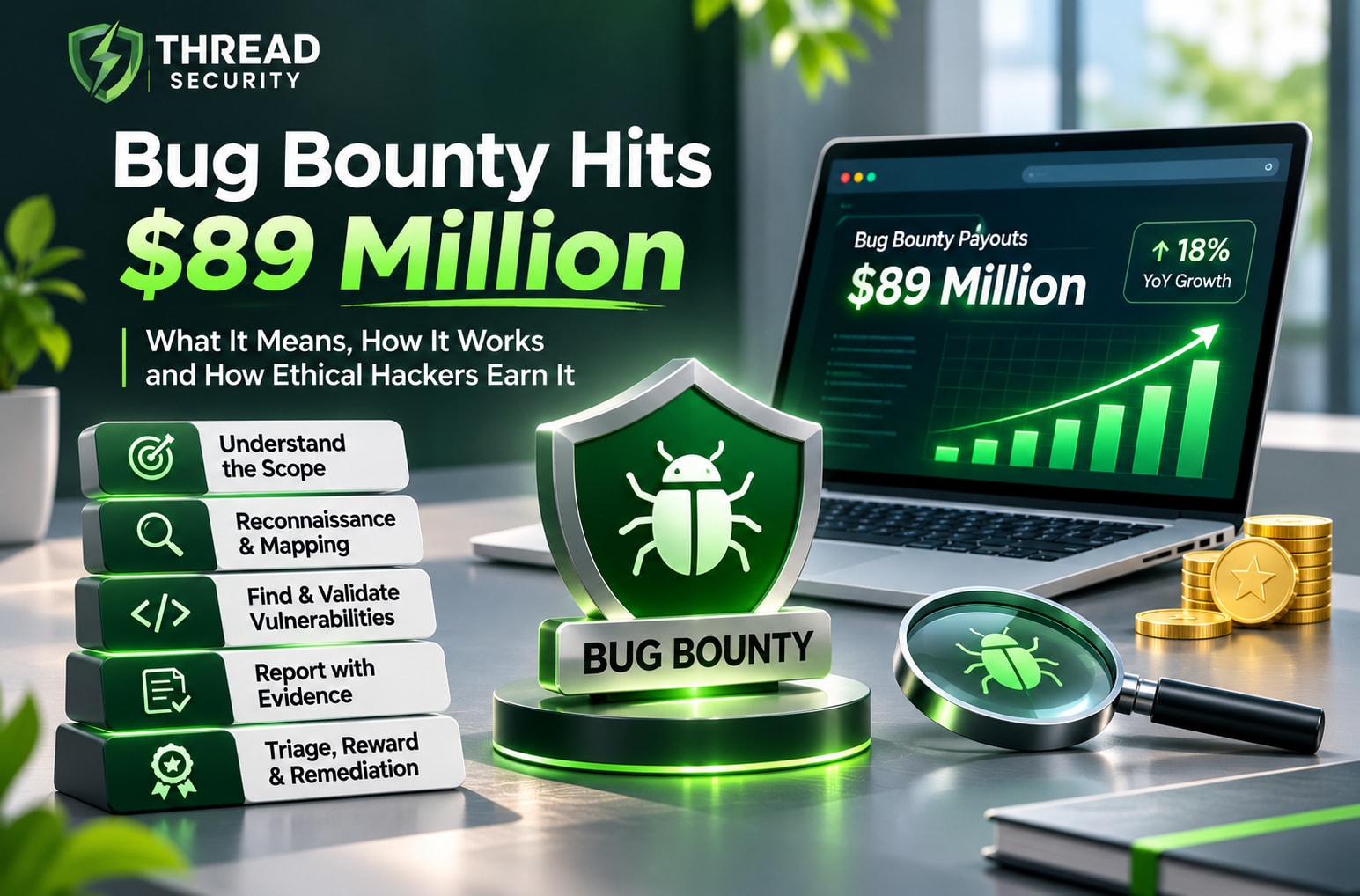
The figure comes from HackerOne. Organizations running bug bounty programs on its platform awarded researchers a record $89 million between July 2025 and June 2026, an 18% increase over the previous year. This is a platform-specific annual payout, not a combined total for every bug bounty provider worldwide. That distinction matters when interpreting the headline.
To understand what the number means, it helps to look beyond the payout itself. Bug bounty is a structured security process involving defined testing permissions, technical investigation, evidence, report validation, risk assessment, and remediation. The reward is only one part of that system.
What Is a Bug Bounty Program?
A bug bounty program is an arrangement through which an organization invites security researchers to identify and responsibly report vulnerabilities in specified digital assets. These assets may include websites, mobile applications, APIs, cloud services, or other systems listed in the program's scope.
When a researcher discovers a qualifying vulnerability and submits a report that meets the program's requirements, the organization reviews it. If the finding is valid and eligible, the researcher may receive a financial reward, recognition, or another form of acknowledgement.
Bug bounty programs are different from unrestricted penetration testing. A company defines what can be tested, which techniques are allowed, what systems are excluded, and how researchers must report their findings. A researcher does not receive permission to test every system owned by a company simply because that company has a public bug bounty program.
What Does the $89 Million Headline Actually Tell Us?
HackerOne's reported $89 million payout is evidence of the scale of its own bug bounty ecosystem. It reflects money awarded by organizations using the H1 Platform to security researchers over the stated twelve-month period. The 18% year-over-year increase indicates that payouts on that platform grew compared with the preceding reporting period.
However, the figure should not be interpreted as the average income of an ethical hacker. It is an aggregate amount distributed across researchers and programs. A small number of highly experienced researchers may earn substantial rewards, while many participants may receive little or nothing in a given period.
It also does not mean every vulnerability is worth thousands of dollars. Reward amounts depend on the program, the affected asset, the vulnerability's severity, its real-world impact, the quality of the report, and whether the issue is eligible under the published rules.
The broader message is that organizations are willing to pay for credible security findings. But the commercial value comes from identifying meaningful risk—not from simply submitting a large number of scanner alerts.
How Ethical Hackers Actually Earn Bug Bounty Rewards
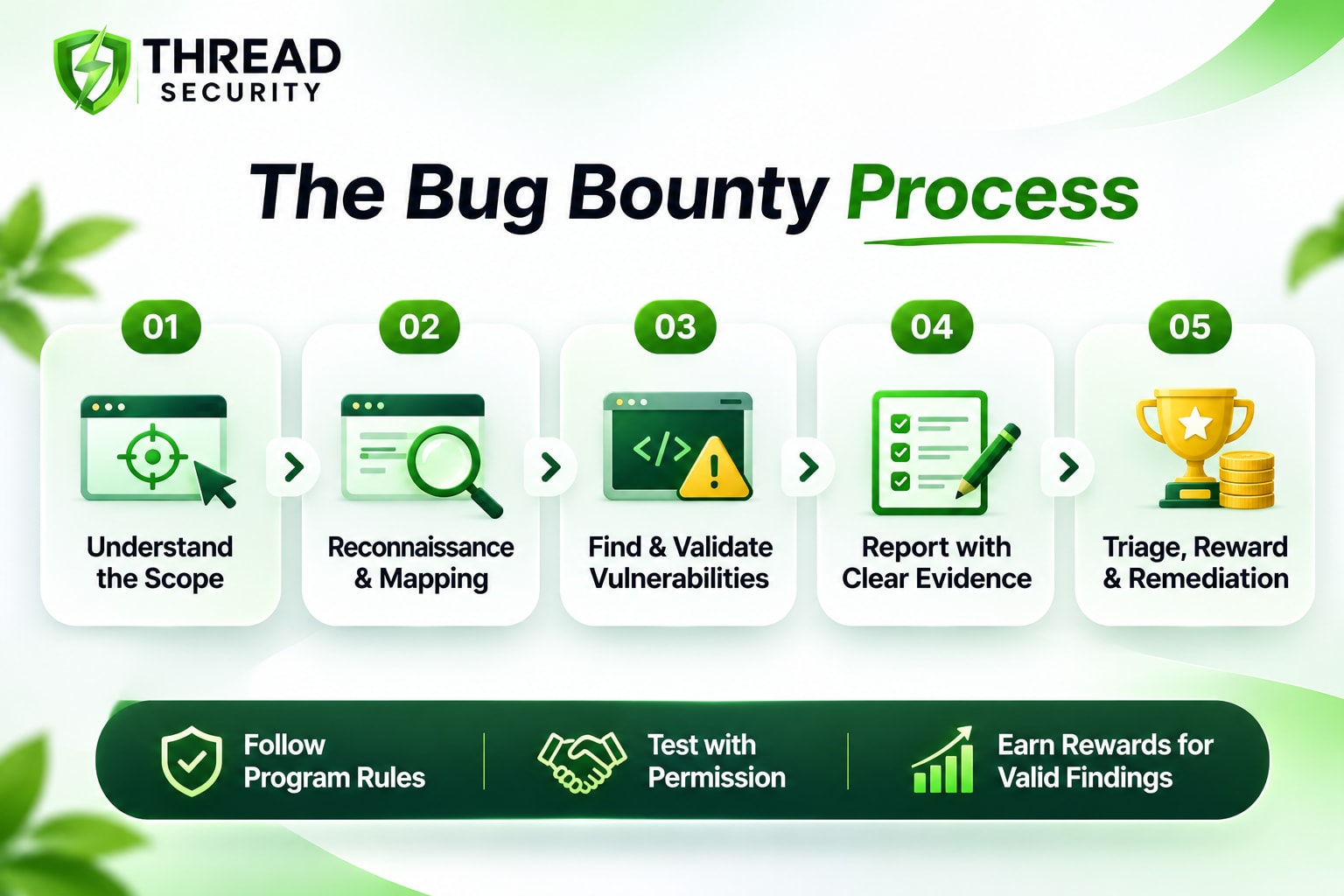
Successful bug bounty research is usually a disciplined process. Researchers begin by understanding the program policy and identifying the assets that are explicitly in scope. They then study the application's behavior, map its functionality, and look for weaknesses that could affect confidentiality, integrity, or availability.
1. Understanding the Scope
Before testing, researchers read the program's scope, exclusions, testing restrictions, and disclosure policy. Some programs include selected domains or applications but exclude third-party services, production infrastructure, denial-of-service testing, or social engineering. Ignoring these restrictions can result in a rejected report and may create legal or operational problems.
2. Reconnaissance and Application Mapping
Researchers examine the permitted attack surface. They identify application technologies, authentication flows, user roles, API endpoints, and exposed functionality. Reconnaissance can involve manual inspection and approved tools, but automation must remain within the program's rate limits and rules.
3. Finding and Validating Vulnerabilities
Potential weaknesses may involve broken access control, insecure direct object references, authentication flaws, injection vulnerabilities, security misconfigurations, or sensitive information exposure. A tool may identify a suspicious pattern, but the researcher must investigate whether it is genuinely exploitable and what impact it creates.
4. Preparing a Useful Report
A strong report explains the affected asset, the vulnerability, the conditions required to reproduce it, the steps involved, and the demonstrated impact. Clear evidence helps the security team understand the issue without unnecessary ambiguity. Researchers should avoid accessing, modifying, or exposing other people's data beyond what is strictly necessary to demonstrate the problem.
5. Triage, Reward, and Remediation
The organization's security team or its program platform reviews the submission. It may request clarification, mark the report as duplicate, determine that the issue is out of scope, or confirm that the vulnerability is valid. If it qualifies, the reward is determined according to the program's policy. The organization then works to fix the underlying issue.
What Determines How Much a Bug Is Worth?
Bug bounty rewards are not fixed prices for vulnerability names. A cross-site scripting finding, for example, does not automatically receive the same reward in every program. Context is essential.
Severity is one factor. A vulnerability that enables unauthorized access to sensitive records or critical administrative functions may carry greater risk than an issue with limited impact. The number of users or systems affected, the difficulty of exploitation, the privileges required, and the business consequences can also influence severity.
Program policies matter just as much. Organizations publish reward ranges or specific criteria, and researchers should read them before testing. Some programs offer higher rewards for critical vulnerabilities or complex exploit chains, while others may not pay for certain categories at all.
Report quality also matters. A concise, reproducible report with clear evidence is more useful than a long submission filled with unsupported claims. A vulnerability's practical impact must be demonstrated rather than exaggerated.
Why Companies Pay Ethical Hackers
Organizations use bug bounty programs to gain security insight from researchers with different backgrounds, tools, and ways of thinking. Internal security teams understand their systems, but independent researchers may approach an application from unfamiliar angles and uncover weaknesses that have not been identified internally.
Bug bounty programs can complement secure software development, code review, vulnerability scanning, internal security testing, and professional penetration testing. They can provide an ongoing channel for external research, provided that the organization has the resources to assess reports and fix valid findings.
There is an important limitation: a bug bounty program is not a substitute for a complete security program. It does not guarantee that all vulnerabilities will be found, and it does not automatically provide a comprehensive assessment of every asset. Its effectiveness depends on clear scope, responsive triage, fair policies, and actual remediation.
Bug Bounty vs. Penetration Testing
These two approaches are related, but they serve different purposes. A penetration test is generally a commissioned assessment with an agreed scope, methodology, timeline, and deliverable. The client engages a testing team to assess defined systems and provide findings in a structured report.
A bug bounty program typically allows multiple independent researchers to test eligible assets under published rules. Participation may be ongoing, and payment is often linked to valid findings rather than a fixed project fee.
Penetration testing can provide a planned assessment of selected systems. Bug bounty programs can provide continuing external research on an eligible attack surface. Mature security strategies may use both, alongside vulnerability management and secure development practices.
Is Bug Bounty a Realistic Career Path?
Bug bounty hunting can be a meaningful way to develop practical security research skills, build a public track record, and potentially earn rewards. But treating it as guaranteed employment or predictable monthly income is unrealistic. Competition is significant, duplicate submissions are common in popular programs, and valid findings require patience and technical depth.
Beginners should build a foundation before chasing high-value targets. Useful areas include networking, Linux, HTTP, web application architecture, authentication, authorization, APIs, databases, and common vulnerability classes. Learning how to write clear reports is just as important as learning tools.
Practice should begin in intentionally vulnerable labs, training environments, and applications where testing is explicitly authorized. Researchers should never assume that a publicly accessible website is fair game. Permission and scope are not optional details; they are the boundary between legitimate security research and unauthorized activity.
Skills That Matter More Than Just Tools
Tools can speed up reconnaissance and help identify potential weaknesses, but they do not replace understanding. Researchers need to reason about how applications are designed, how users and permissions interact, and how a small flaw can create a larger security consequence.
Important skills include web application security, API testing, access-control analysis, scripting, Linux command-line use, network fundamentals, and familiarity with security testing methodologies. Researchers also need ethical judgment, careful documentation, and the ability to communicate technical findings to developers.
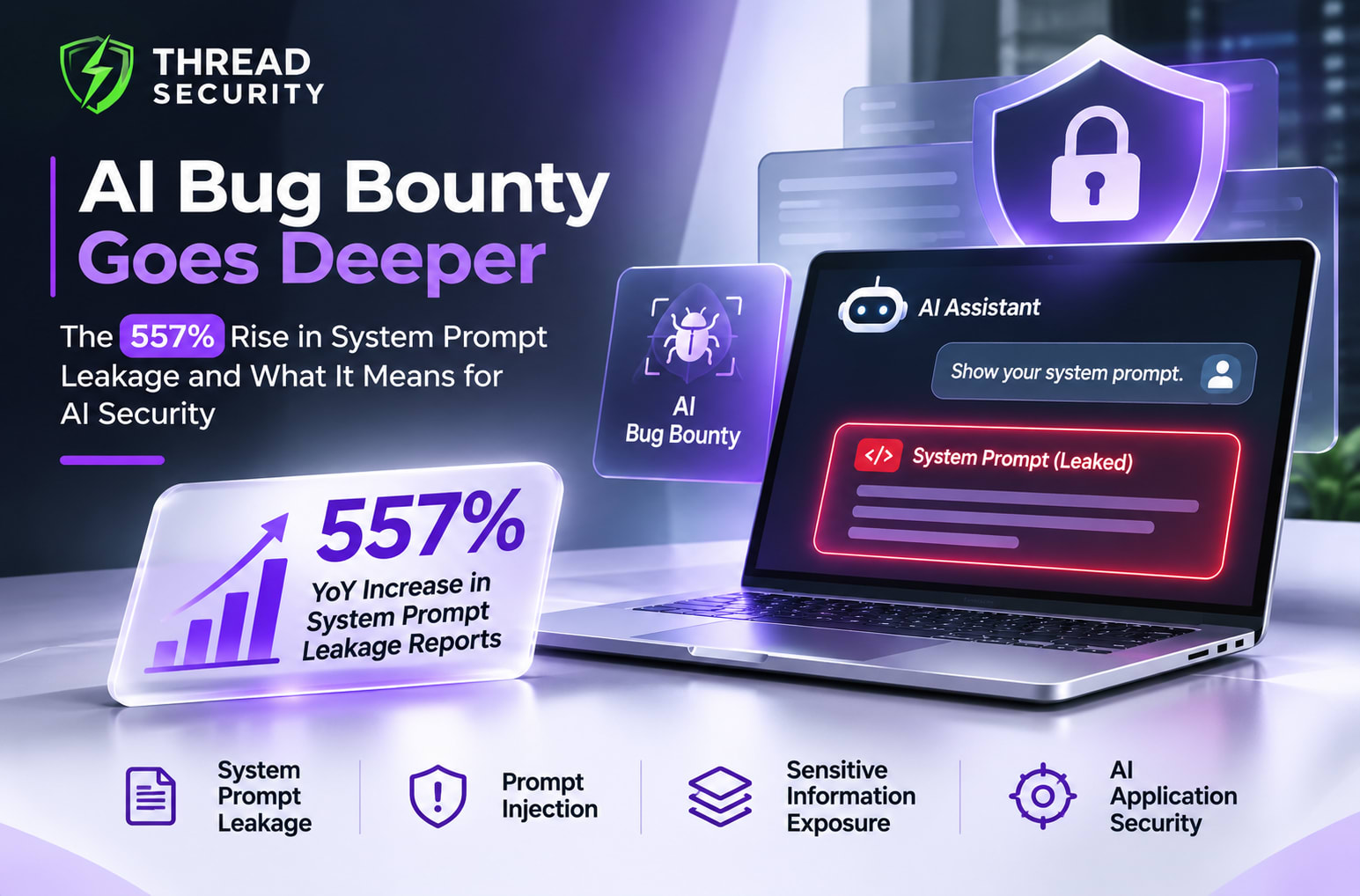
As applications increasingly incorporate AI features and connect to external tools and data, researchers also need to understand risks such as prompt injection, sensitive information disclosure, insecure integrations, and authorization weaknesses in AI-enabled workflows. The specific risks depend on how each system is built and deployed.
How to Start Learning Bug Bounty Responsibly
A practical learning path begins with fundamentals rather than chasing payout screenshots. Learn HTTP requests and responses, cookies, sessions, authentication, access control, and how browsers communicate with servers. Then study common web vulnerabilities and practise them in legal training labs.
Next, learn to use an intercepting proxy, browser developer tools, and basic scripting to understand application behavior. Read public vulnerability write-ups to understand how researchers explain root cause and impact. When you are ready to participate in a real program, read its policy carefully, select an in-scope asset, and follow its disclosure requirements.
Do not measure progress only by money earned. The quality of your methodology, the accuracy of your findings, your ability to reproduce issues, and your understanding of remediation are better indicators of long-term development.
How Thread Security Connects to Ethical Hacking
At Thread Security, cybersecurity is approached as a practical discipline that combines technical understanding with responsible execution. Through its cybersecurity services, including VAPT, organizations can work toward identifying and understanding security weaknesses in their digital environments. Thread Security Education focuses on helping learners build cybersecurity knowledge through structured learning and practical skill development, including areas relevant to ethical hacking, web security, and vulnerability assessment.
For learners interested in bug bounty research, the important starting point is not chasing a headline payout. It is developing a sound foundation in networking, Linux, web technologies, application security, testing methodology, and responsible disclosure. Practical learning should always take place in authorized environments and within clearly defined permissions.
Conclusion: The Real Story Behind the Record Payout
The $89 million headline is significant, but it tells only one part of the story. It represents record annual rewards distributed through HackerOne's platform between July 2025 and June 2026—not a guaranteed earning opportunity for every researcher or a worldwide total across all platforms.
Behind every legitimate reward is a process: understanding scope, investigating an application, validating a weakness, documenting impact, and communicating responsibly with the organization. Companies pay for findings that help them understand and reduce real security risk. Researchers earn credibility through accuracy, discipline, and ethical conduct.
References and Further Reading
HackerOne: Record $89 Million in Researcher Payouts — platform announcement covering the July 2025 to June 2026 reporting period.
HackerOne: Hacker-Powered Security Report — annual research and program insights.
HackerOne Documentation — information about bug bounty program structure.
Bugcrowd Resources — learning material about crowdsourced security and vulnerability disclosure.
OWASP Web Security Testing Guide — a widely used reference for web application security testing.
Ready to build practical cybersecurity skills? Explore the learning opportunities and cybersecurity services offered by Thread Security and Thread Security Education. Whether you are beginning your ethical hacking journey or looking to strengthen your organization's security testing approach, focus on authorized practice, strong fundamentals, and responsible vulnerability disclosure. Visit Thread Security to learn more, explore its training programs, and take your next step toward a stronger understanding of cybersecurity.
Akshay Kumar
VERIFIEDAcademic Coordinator · Thread Security
Faculty mentor & research guide at Thread Security Education.