Imagine that you have finally built an AI feature that works. It answers questions, summarises documents or helps users complete a task that once took much longer. Your tests look promising, the demonstration goes smoothly, and the team is ready to release it.
Then someone asks a question that has nothing to do with model accuracy: what happens if the feature gives a misleading answer, exposes information it should not reveal, or makes a recommendation that affects someone unfairly?
Suddenly, the conversation changes. Building the feature was only part of the job. You also need to understand how it behaves in the real world, what information it uses, how users will interpret its output and who will take responsibility when something goes wrong.
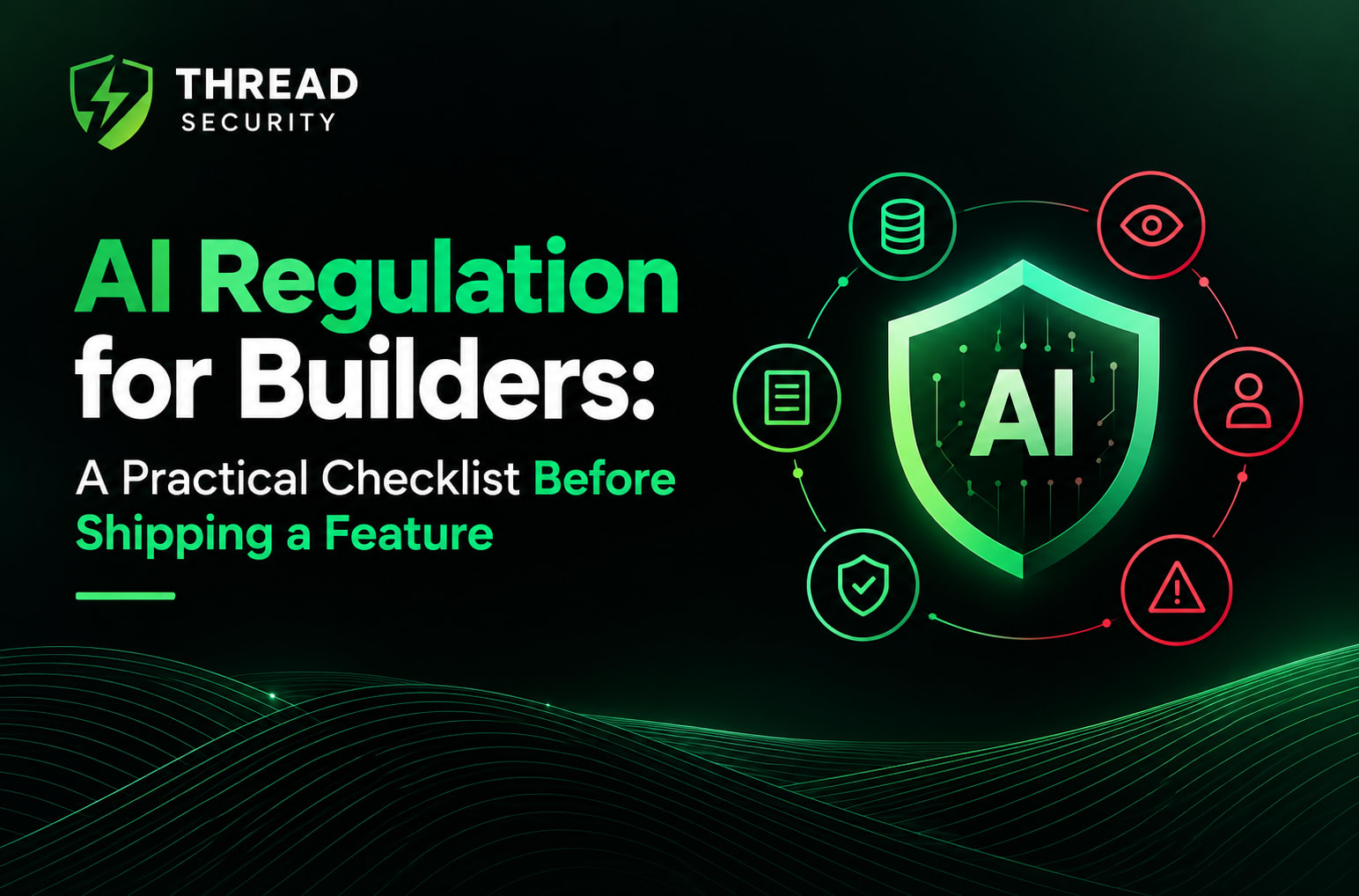
This is where AI regulation and responsible AI development become practical concerns rather than abstract policy discussions. For developers, students and teams building AI products, the goal is not to become legal experts overnight. It is to make thoughtful decisions before a feature reaches real users.
AI Regulation Is Not Just a Legal Team's Problem
When people hear the term AI regulation, they may imagine lengthy legal documents, compliance departments and rules written for large technology companies. But many of the decisions that influence responsible AI use happen much earlier, during product design and development.
A developer chooses which data enters a system. A product team decides whether an AI-generated answer should be shown without review. Someone determines how much confidence to place in a model's output and whether users should be told that AI is involved.
These choices can affect privacy, reliability, fairness and trust. That is why regulatory awareness belongs in the development process, not just at the final approval stage.
For learners exploring AI through practical projects, including the training and technology initiatives associated with Thread Security, this is an important habit to develop early: think about how a system could fail, not only how to make it work.
Start With the Data Your AI Feature Uses
Consider a simple AI assistant that answers questions using uploaded documents. The model may work exactly as expected, but the documents could contain personal information, confidential business material or details that the person uploading them is not authorised to share.
Before building or releasing a feature, ask where its data comes from, why that information is needed, who is allowed to access it and whether it is retained after use. Think about what is sent to external model providers, APIs or other services as well.
Collecting less information can reduce unnecessary exposure. Clear retention practices, access controls and appropriate security measures can help protect the data that the application genuinely needs.
In India, the Digital Personal Data Protection Act, 2023 is relevant to the handling of digital personal data. Its application depends on the circumstances and the applicable provisions, rules and commencement arrangements. Teams should verify the current requirements rather than assuming that a general checklist replaces legal advice.
The practical lesson is straightforward: do not wait until deployment to ask whether the data should have been collected in the first place.
Make It Clear When AI Is Involved
Imagine asking a support question on a website and receiving a confident answer from an AI assistant. If you believe you are speaking to a human representative, you may place a different level of trust in that response or assume that someone has verified it.
Transparency helps users understand what they are interacting with and what the system can realistically do. Depending on the product, this may mean identifying AI-generated content, explaining the feature's purpose, communicating its limitations or providing a clear way to reach a human.
Good explanations do not need to be technical. Users should not have to understand model architecture to know whether an answer is generated, whether it may be inaccurate or when they should seek confirmation.
Teams should also avoid making broad claims such as completely unbiased, always accurate or fully secure unless those claims can be properly supported. A polished interface does not make an AI system infallible.
Test Beyond the Perfect Demonstration
A demonstration usually shows a system at its best. Real users, however, ask unexpected questions, provide incomplete information, upload unusual files and sometimes deliberately try to make the system behave in unintended ways.
Testing should reflect these situations. Check whether the system invents facts, mishandles sensitive information, responds inconsistently or produces inappropriate outputs. For retrieval-based applications, examine whether answers are supported by the retrieved material. For systems that use tools or external services, check what happens when those services return unexpected results.
It is also useful to test different user scenarios and consider whether the system performs poorly for particular groups or types of input. Record important limitations and repeat evaluations when the model, prompts, data or surrounding application changes.
No test suite can guarantee that every failure has been found. The objective is to identify meaningful risks, reduce them where possible and understand the limitations that remain before users depend on the feature.
Keep Human Oversight Where It Matters
Automation can save time, but not every decision should be treated as an ordinary automated task. An AI tool that suggests edits to a draft has a different risk profile from a system that influences recruitment, financial decisions, access to services or other consequential outcomes.
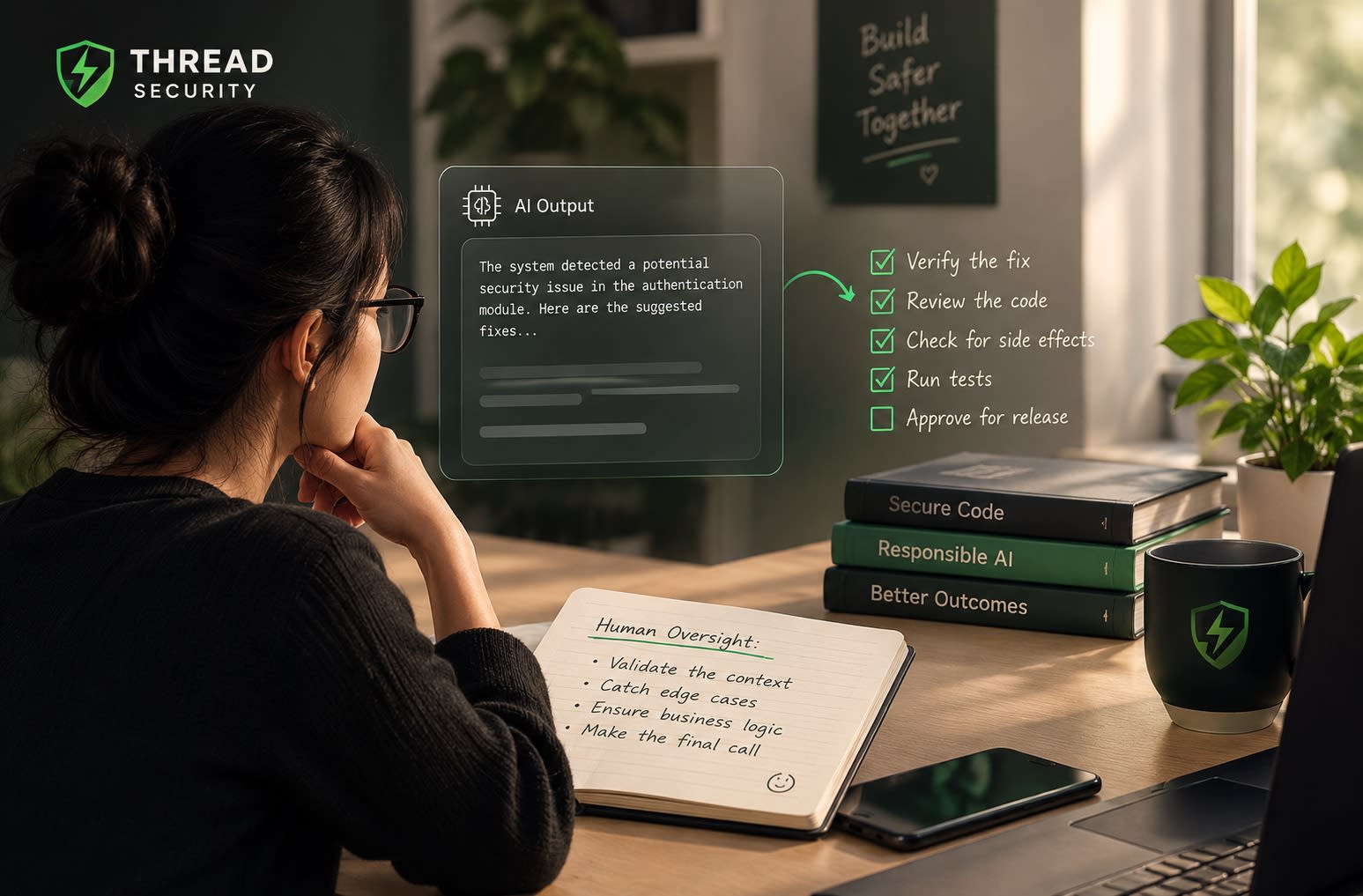
Think carefully about what happens after the model produces an answer. Can a person review it? Is there a way to correct an error? Can a user challenge a decision or ask for assistance? Does the reviewer have enough information and authority to intervene?
Human oversight should be meaningful rather than a button added to the interface for appearances. If a person is expected to review an AI recommendation, they need the time, context and ability to question it.
The level of review should match the potential consequences of failure. A low-risk productivity feature may need a lighter process than a system used to inform high-impact decisions.
Plan for Problems Before Release
Responsible development does not end when a feature passes its tests. Models can behave differently as inputs change, connected services can fail, and users may discover weaknesses that were not anticipated during development.
Before launch, decide how users can report harmful or incorrect outputs, who will investigate a problem and how the team can disable or roll back a feature if necessary. Keep enough appropriate records to understand incidents without collecting unnecessary personal information.
Monitoring should also have a clear purpose. Look for patterns that indicate reliability issues, misuse or unexpected behaviour, while respecting privacy and access restrictions. When a problem occurs, document what happened, what was affected and what will change to reduce the chance of recurrence.
A small team does not need an elaborate process to begin. It does need clear ownership and a realistic way to respond when the system fails.
Understand the Rules That Apply to Your Product
AI governance is evolving, and requirements can differ according to jurisdiction, sector, intended use and the type of information being processed. A general article cannot determine every obligation for every product.
In India, the AI Governance Guidelines announced by the Ministry of Electronics and Information Technology provide a useful reference for understanding the country's approach to AI governance. They should be read alongside the laws and sector-specific requirements that apply to the particular use case.
Developers should distinguish between guidance, existing legal obligations and requirements that may depend on implementation dates or further rules. If a product handles sensitive information or could have significant effects on people, seek qualified legal and compliance advice before making assumptions about what is permitted.
For teams working across AI and cybersecurity, resources and learning opportunities from Thread Security can also form part of a broader effort to understand the technical and security considerations surrounding modern technology. Learning resources are a starting point, not a substitute for product-specific legal review.
Build Responsible AI Into the Workflow
The most useful time to consider AI regulation is before the design becomes difficult to change. When planning a feature, discuss its purpose, the data it needs, the people it could affect and the consequences of a wrong output.
During development, build privacy and access controls into the system, test realistic and adversarial scenarios, document limitations and decide where human review is necessary. Before release, confirm that the team understands its responsibilities, that users receive appropriate information and that there is a workable plan for handling incidents.
These steps do not guarantee compliance or eliminate every risk. They create a repeatable process for asking better questions and making risks visible while there is still time to address them.
Final Thoughts
Building an AI feature that works is an achievement. Building one that people can use with an appropriate understanding of its strengths, limitations and risks is a more complete engineering task.
AI regulation may sound like a topic reserved for lawyers and policymakers, but its practical questions are familiar to anyone who develops software: what information are we handling, how could this fail, who could be affected and what will we do if it does?
The next time an AI project is almost ready to ship, take a step back from the demonstration and examine the experience from the user's perspective. A little more thought before release can make the difference between a feature that merely works and one designed to be used responsibly.
Gurmehak Kalra
VERIFIEDAI Technical Associate · Thread Security
Faculty mentor & research guide at Thread Security Education.